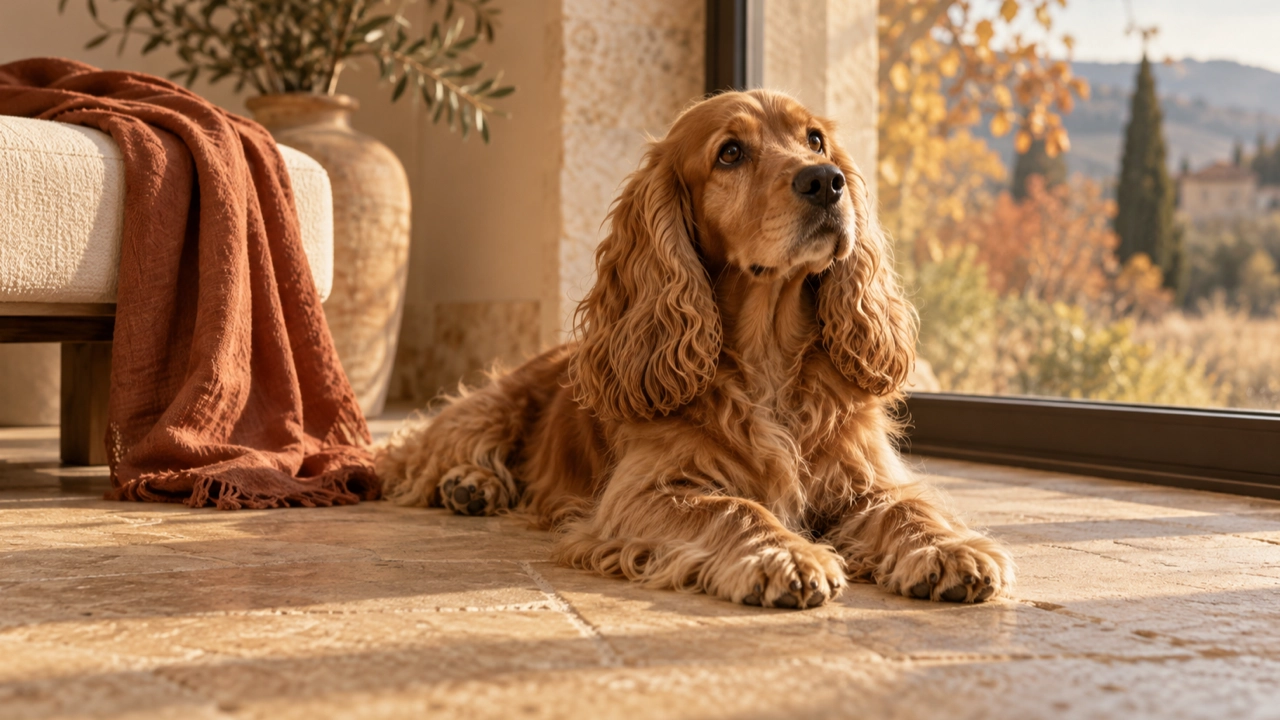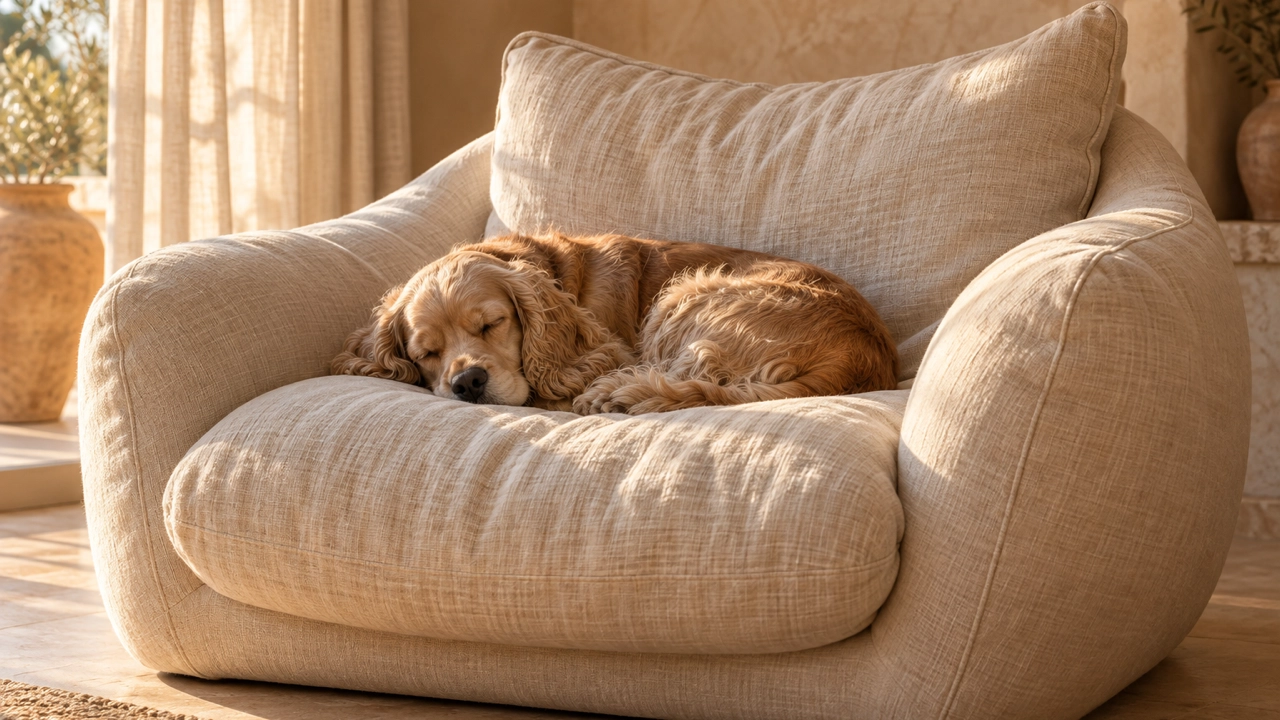
Your dog has been asleep on the sofa since lunch. You check on them twice, wondering whether this is ordinary or a sign that something has changed. Most of the time, a dog who sleeps a great deal is simply doing what dogs do well.
Sleep is one of the easiest things to notice about a dog, which makes it one of the most useful. Knowing the typical pattern helps you tell an ordinary day from a change worth raising with your vet. This guide covers how much sleep a healthy dog needs, why they nap in short bursts, how to shape a calm place to rest and when a change calls for a vet check.
How much sleep a healthy adult dog needs
A healthy adult dog typically sleeps about 12 to 14 hours across a full day. That figure includes naps, so it is a total for the whole day, not one long stretch at night. Treat it as broad guidance, not a target. Breed, size, age, temperature, activity and household routine all shape what is normal for an individual dog.
A total on its own tells you little. Look at the pattern instead. Is your dog alert and interested when awake? Do they eat, drink and move around as usual? A dog who seems well in their waking hours is usually doing fine, even if their total sits towards one end of that range.
Why puppies and senior dogs sleep more
Puppies sleep far more than adult dogs. Much of that rest supports growth, and young dogs are constantly taking in new sights, sounds and smells. A puppy who flops halfway through a game is not being lazy. They are doing what their age calls for.
Senior dogs also rest more than they once did. Stiffer joints, slower recovery after activity and a preference for calmer days can all play a part. Gentle, regular movement still matters, though. Our guide to how much exercise a senior dog needs explains how to keep an older dog moving without asking too much of them.
Why dogs nap in short bursts
Dogs are nappers. Rather than one long block of sleep, most dogs spread their rest across the day in short bursts: dozing, waking, looking around, then dozing again. That pattern suits an animal that rests between periods of activity while staying aware of what is going on around it.
Short naps are not a sign of restlessness. A dog may stir when a door closes, lift their head at a voice in the hall and settle again within minutes. Twitching paws, soft noises and small leg movements during sleep are also common, and usually nothing to worry about.
Treat rest as part of wellbeing
Rest is not what happens between the good parts of the day. It is part of the routine that keeps a dog well. Walks, play and time with people use up energy, and sleep is where a dog recovers from it. Activity and rest work as a pair, so judge them together, not one at a time. For a practical way to judge the activity side, walkingdog.io’s guide to daily dog steps explains why minutes and intensity are a better guide than a step count.
A useful check is to look at the whole day. Is there movement, some interest and some quiet? Are meals and walks roughly predictable? A dog with a steady rhythm often settles more easily because they know what comes next. Our guide to how much attention a dog really needs covers the balance between exercise, enrichment, connection and calm.
Watch patterns over weeks rather than single afternoons. A dog who sleeps more after a busy weekend is probably just tired. A dog who sleeps more most days for a sustained period deserves a closer look.
Shape a calm, considered sleep space
A good sleep space works like good furniture. It belongs in the room, suits the way people use the house and stays easy to keep clean. Choose a quiet corner rather than the main route between rooms, where feet, doors and visitors keep passing. The best spot lets your dog keep an eye on the household without sitting in the middle of it.
Avoid draughts and direct heat. A bed beside a radiator can become uncomfortably warm, while a spot by an outside door can feel cold. Aim for a space that stays comfortably warm and sheltered. Close the curtains if street lights or early sun keep disturbing your dog, and dim the lights in the evening.
The bed should support the dog, not merely occupy a corner. Choose one long enough for them to stretch out and turn around in, with enough padding to cushion elbows and hips. Supportive does not have to mean thick. It means the bed holds its shape, lifts the dog off cold floors and stays put when they move. Pick a removable, washable cover, since mud and hair will find their way in.
Keep the bed for resting only. A dog sent there as a punishment will not see it as a refuge, while one who trusts their bed is more likely to use it when they need to settle. For the wider layout of the home, see our guide to designing a home that works with a dog.
When a change in sleep is worth a vet visit
Changes in sleep are common, and a single unusual day rarely needs action. The signal is a change that carries on. Speak to your vet if it does, or if a change in sleep comes with any of the following:
- lethargy, or less interest in walks, play and food
- changes in appetite, drinking or toileting
- restlessness at night, or difficulty getting comfortable
- stiffness, reluctance on stairs or difficulty getting up
- panting at rest, whimpering or shaking without an obvious cause
- a shift in behaviour, such as irritability, withdrawal or unusual clinginess
Some signs cannot wait. A dog who is hard to rouse, struggling to breathe or unable to stand needs a vet straight away. For anything less urgent, your vet can check for pain, illness and other causes, and they know your dog’s history. Treat the numbers in this guide as broad guidance, not a diagnosis. Do not give a sedative or sleep aid without veterinary advice.
If you are unsure, call. A short conversation about a sleepy dog is always time well spent.
Most dogs spend a large part of their lives asleep. That is normal, and it is part of how a dog stays well. Watch the pattern, make the rest comfortable and take any lasting change seriously. A dog who rests, moves and eats well is usually in good shape.