A clear morning can look inviting from the kitchen window. Outside, the wind slips through your coat and the pavement is cold under your dog’s paws. The question is not simply whether the air feels cold to you. It is whether this particular dog can stay comfortable for this particular walk.
So, how cold is too cold to walk a dog? There is no single number that works for every breed, age and condition. A short outing on a sheltered street is different from an hour in open wind. Start with the forecast, then look at your dog and the ground beneath them.
Read the forecast as a starting point
A dog walking temperature chart can help you notice when to change plans. It cannot tell you exactly how long your dog should be outside. Treat any chart as a prompt to check the conditions, not permission to keep walking until a timer runs out.
On a cool, dry day, many healthy dogs are comfortable with their usual route. Near freezing, consider a shorter route, especially for small, thin-coated or older dogs. When temperatures fall well below freezing, prolonged exposure becomes a concern for more dogs. Keep outings brief and purposeful, or move exercise indoors. These are broad cues, not universal cutoffs.
The number on a weather app is only part of the picture. Wind strips away warmth. Wet fur loses insulation. Snow, slush and icy pavement change how paws feel and how securely your dog can walk. A damp day just above freezing may be less comfortable than a still, dry one at a lower temperature.
Check the conditions at the time you will leave, not only the day’s high. A sunny afternoon and an early morning can ask for very different walks.
Consider the dog, not only the temperature
Coat, body size and age all affect cold tolerance. A dense double coat can offer more protection than a short, fine coat. Small dogs have less body mass to hold warmth and may walk closer to cold, wet ground. A dog who has just been clipped may need a different routine from the one that worked before grooming.
Puppies, senior dogs and dogs managing illness may have a harder time regulating temperature or moving comfortably on icy surfaces. Lean dogs and dogs with thin fur may also feel the cold sooner. Even within the same breed, tolerance varies. A dog acclimatised to winter may respond differently from one encountering the first cold week of the season.
If your dog has a health condition, reduced mobility or a history of struggling in cold weather, ask your veterinarian for individual guidance. A coat can help some dogs, but it does not make a long walk safe in every condition. It should fit well, leave movement free and stay dry.
Watch for signs your dog is too cold
Your dog gives you more useful information than a chart. Shivering is an obvious sign, but it is not the only one. Watch for a tucked posture, lifted paws, a slowing pace, reluctance to move forward or repeated attempts to turn home. A dog may seem unusually anxious, stiff or quiet. Check whether they are still exploring and moving with their usual ease.
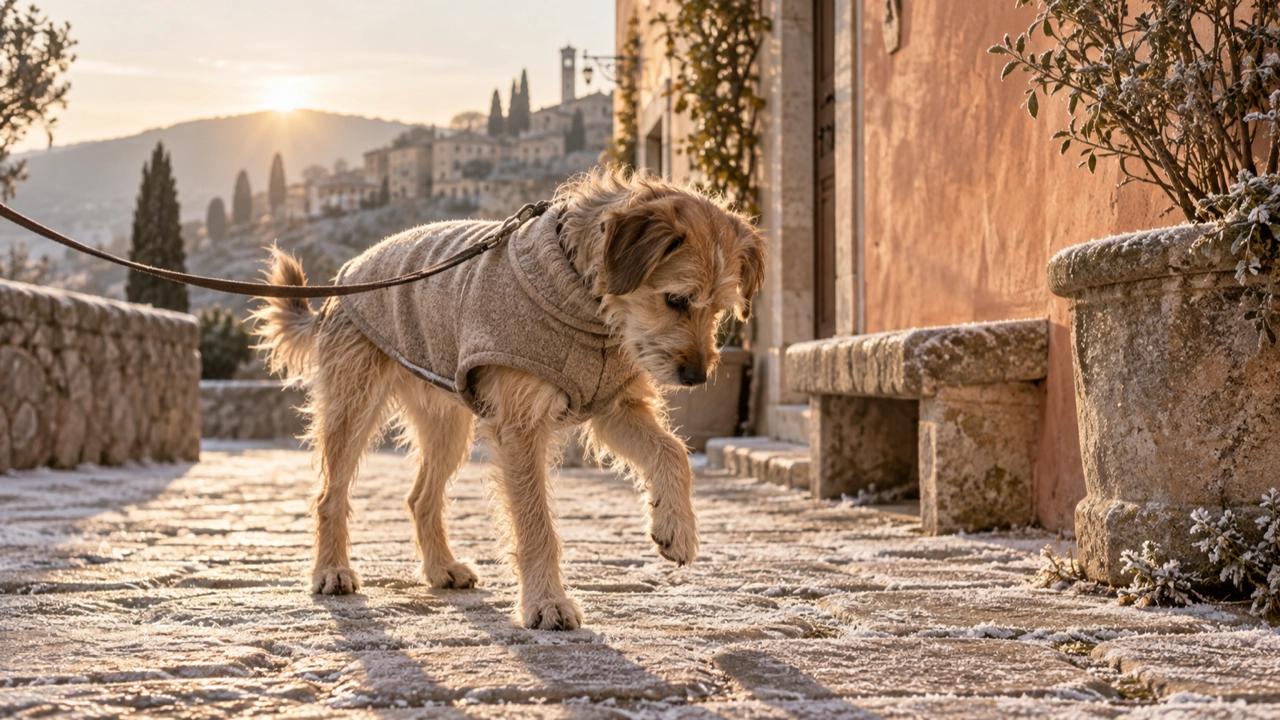
Paw lifting can mean cold ground, but it can also signal ice caught between the toes, irritating salt or an injury. Stop somewhere sheltered and look. Do not insist on finishing a loop because you are nearly done. Take the shortest comfortable route home and warm your dog gradually in a dry place.
If your dog seems weak, confused, very lethargic or unable to warm up after coming inside, contact a veterinarian promptly. The aim is to notice discomfort early, before an ordinary walk becomes an urgent problem.
Keep paws clear of ice and salt
Winter pavement has its own hazards. Salt and de-icing products can irritate paw pads and collect between toes. Ice can form small, painful clumps in longer fur. Before leaving, check for cracks, cuts or already sore pads. Choose a route with less treated ground where possible, without exchanging a clear pavement for a slippery one.
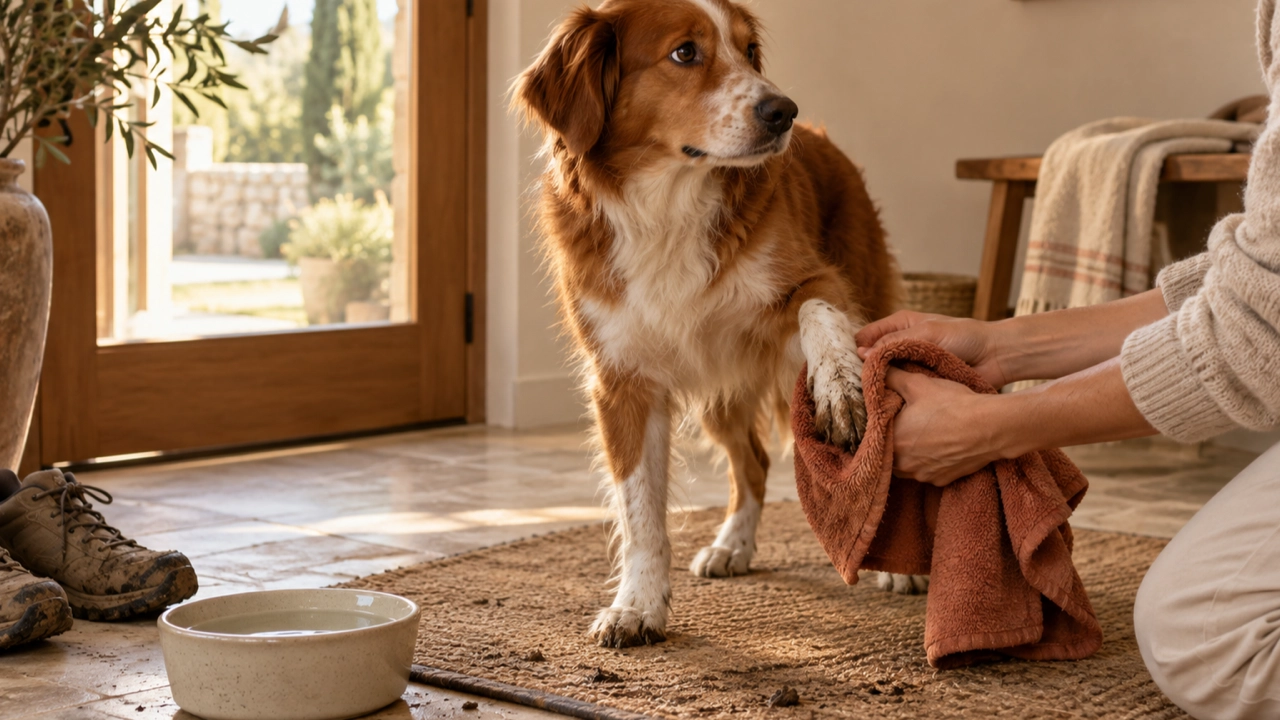
After the walk, wipe each paw with a damp cloth, including between the toes, then dry it gently. This removes grit and reduces the chance of your dog licking residue from their feet. Inspect for redness or small injuries. If irritation persists, seek veterinary advice rather than repeatedly exposing sore paws to the same route.
Well-fitting dog boots can be useful for some dogs on heavily treated paths, but give your dog time to get used to them indoors. Never assume new footwear solves every surface problem. You still need to watch for slipping, rubbing and signs that your dog wants to stop.
Make winter walks shorter and more deliberate
Walking a dog in winter does not have to mean abandoning the routine. It often means changing its shape. Choose a sheltered loop close to home. Walk during the warmer part of the day when your schedule allows. Keep moving at a comfortable pace, but leave time for sniffing without a long, stationary wait in the cold.
Plan an easy turn-back point rather than a route that only makes sense if completed. On very cold days, several brief outings for toileting may suit your dog better than one extended walk. Add gentle indoor play, food puzzles or short training sessions for activity without prolonged exposure. Exercise matters, but it need not always happen outdoors.
Cold ground is harder to judge when you cannot see it clearly. If your route also falls after sunset, our guide to walking a dog safely in the dark covers visibility and route choice. Keep the cold-weather decision separate: lights make a path easier to navigate, not warmer.
Know when to skip the walk
Sometimes the kindest plan is a quick toilet break and a return indoors. Consider skipping the full walk when the ground is dangerously icy, wind and wet are severe, or your dog shows discomfort almost immediately. Do the same when you cannot offer a safe, short route home if conditions change.
A missed walk is not a failed routine. Give your dog a chance to toilet, dry them afterwards and offer calm indoor activity. Try again when conditions improve. If your dog repeatedly struggles even in milder cold, speak with your veterinarian about what may be changing.
The best winter routine is attentive rather than rigid. Check the weather, choose a route that can change, and let your dog’s movement tell you when it is time to go home.
Join the Ottimo Plus waitlist for considered dog essentials designed around everyday life together.