A good walk rarely ends at the front door. Mud, sand, grit and fragments of leaves travel home on four paws, often settling between the toes where a quick glance will miss them. Cleaning your dog’s paws after a walk is less about keeping the floor immaculate and more about making a small care check part of the routine.
Set up a small landing station
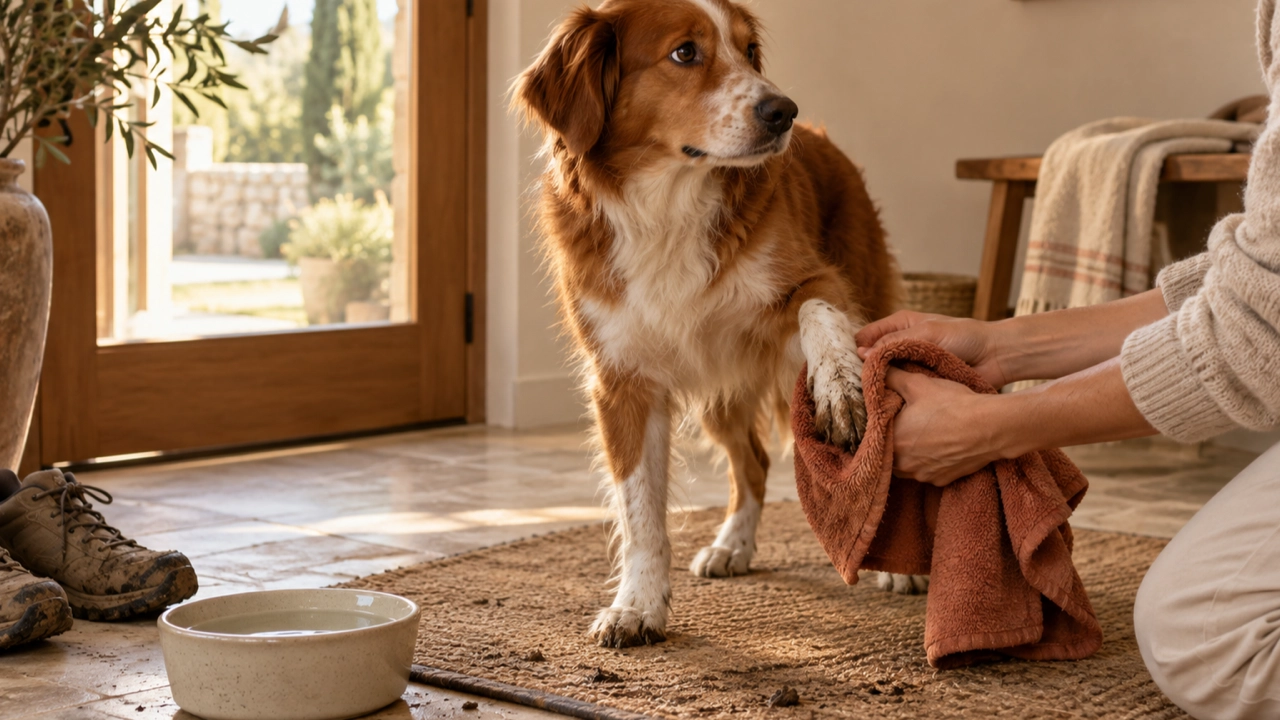
Keep the essentials near the entrance you use most: an absorbent towel, a shallow bowl or clean cloth, and a mat with a washable surface. If everything has a place, paw cleaning becomes the natural final step of the walk rather than an interruption once your dog is already racing through the house.
Choose a spot where your dog can stand without slipping. A rubber-backed mat is useful on tile or wood. For a small dog, a stable bench may make the job easier, but only if the dog is comfortable being lifted and cannot jump from it.
The routine should feel predictable. Come in, pause on the mat, clean each paw in the same order, then release your dog with a familiar word. A treat can help while the habit is new, especially for dogs that are wary of having their feet handled.
Match the clean to the walk
Not every outing calls for a full wash. Start by looking at what the paws actually picked up.
For a dry pavement walk, a towel may be all that is needed. Wipe the pads and the fur around each foot, then check that no small stone or seed has lodged between the toes.
For mud, wet a soft cloth with lukewarm water and loosen the dirt before wiping it away. Work gently rather than scrubbing. If mud has dried into longer fur, holding the damp cloth against it for a few seconds is kinder than pulling.
For sand, rinse rather than rub. Fine grains can sit between the pads and feel abrasive when pressed back and forth. A shallow bowl, handheld shower or clean stream of lukewarm water lets the sand fall away.
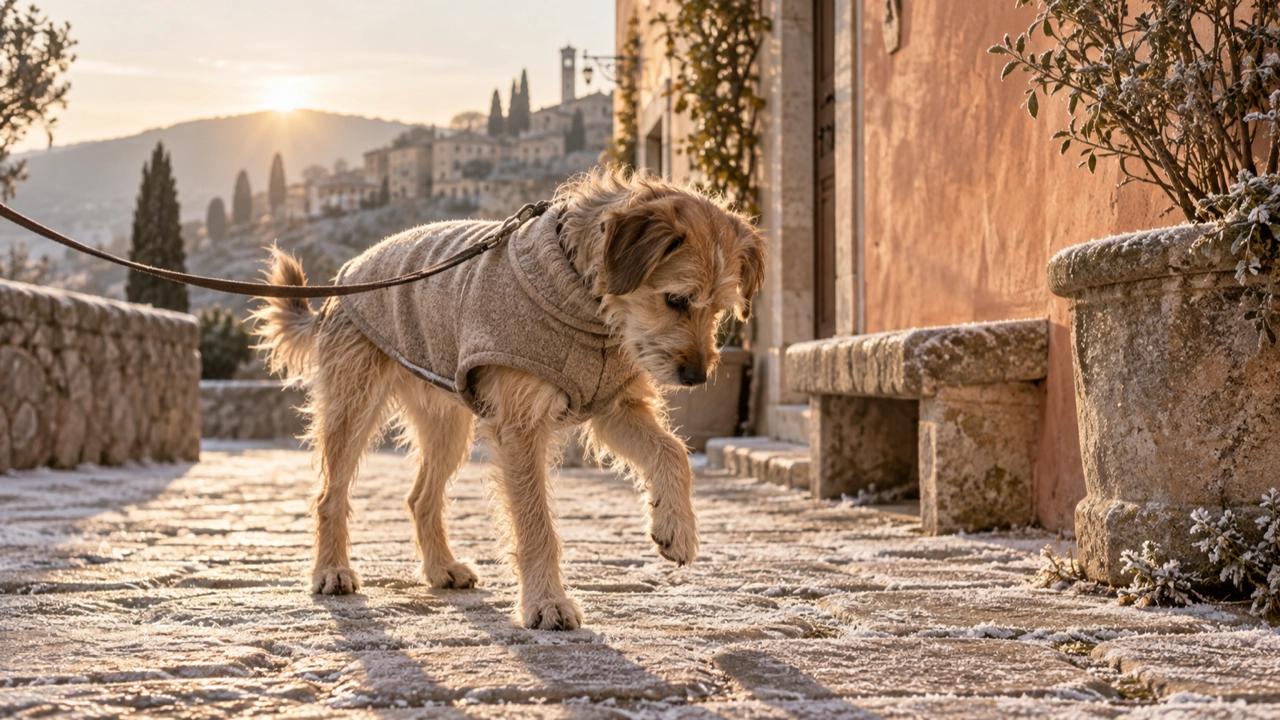
After winter streets, pay particular attention to the spaces around the pads and nails. Grit and de-icing residue can remain out of sight. Rinse thoroughly, then dry. The same careful rinse makes sense after walking through any unknown spill or treated surface. If you suspect your dog has stepped in a harmful substance, prevent licking and contact a veterinarian for specific advice.
Clean between the toes
The visible pad is only part of the job. Lift one paw at a time and gently spread the toes just enough to see the skin and fur between them. Remove loose debris with your fingers or a damp cloth. Do not dig at anything embedded or painful.
This is also the moment to notice small changes: redness, swelling, a cut, a cracked pad, a damaged nail or an area your dog does not want touched. Compare one paw with the others if you are unsure. A little everyday familiarity makes an unusual change easier to spot.
Be cautious with grass seeds, thorns and splinters. If an object is superficial and slides away without resistance, remove it gently. If it appears embedded, the area is sore or your dog is limping, leave it alone and call your veterinarian. Probing can push a foreign object deeper.
Dry as carefully as you wash
Drying is not an afterthought. Press a clean towel around each paw, including between the toes, without rubbing hard. Damp fur can hold more grit and make smooth floors slippery.
Dogs with dense or long hair around their feet may need a second pass. Use the corner of the towel to blot between the pads, then allow the paws to finish drying before your dog settles onto a bed. If the fur regularly traps mud, ask a groomer how to keep it tidy without cutting too close to the skin.
Wash and rotate the towels often. A towel that remains wet by the door will quickly stop feeling like a clean solution.
Use fewer products, more thoughtfully
Plain lukewarm water is a sensible default. If you use wipes, shampoo or balm, choose a product made for dogs and follow its directions. Human soaps, fragranced household wipes and cleaning sprays may be too harsh for skin that is already exposed to weather and rough ground.
Avoid turning balm into an automatic final step. Healthy pads are naturally textured, not meant to feel perfectly smooth. If they seem persistently dry or cracked, ask your veterinarian which product is appropriate and whether something else is causing the change.
Dog boots can reduce contact with hot, icy or heavily gritted surfaces, but they need to fit well and be introduced gradually. Check the paws after removing them too: a boot can trap moisture or rub if it twists during the walk. The same fit-first thinking applies to the rest of your walking setup; our guide to how a dog harness should fit offers a useful pre-walk check.
Help a reluctant dog accept paw handling
Some dogs pull away because the sensation is unfamiliar. Others have learned that reaching for a paw predicts nail clipping or discomfort. Build cooperation away from the muddy doorway, when neither of you is in a hurry.
Begin with a brief touch to the shoulder or leg, reward calm behaviour, and stop. Over several short sessions, work lower until your dog is comfortable with you holding a paw for a moment. Then introduce the dry towel, followed later by a damp one. Keep each step easy enough that your dog remains relaxed.
Do not restrain a frightened dog to finish all four feet. Clean what you safely can, protect the room if necessary, and practise again later. Sudden resistance from a dog that normally accepts paw handling may signal soreness rather than stubbornness.
Know when a routine check becomes a health concern
Paw cleaning is useful because it gives you a regular view of an area dogs often hide. Contact a veterinarian if you notice persistent licking or chewing, increasing redness, swelling, bleeding, discharge, an unpleasant smell, a deep crack, a damaged nail, or reluctance to put weight on a foot. Seek prompt advice if the paw may have touched a toxic substance or a hot surface.
Do not apply alcohol, hydrogen peroxide or a human pain cream to an injury unless a veterinarian has specifically told you to. Covering a paw without guidance can also trap moisture or become too tight.
Make the last minute of the walk count
A useful paw routine takes little time: pause, assess, rinse only as much as needed, check between the toes and dry well. Done consistently, it keeps outdoor mess manageable and turns an ordinary household task into a quiet wellbeing check.
Good equipment makes routines easier when it removes friction instead of adding more. Join the Ottimo Plus waitlist for thoughtful dog gear designed around everyday life together.