A dog-friendly home does not need to look like it belongs entirely to the dog. Nor should it require constant vigilance from the people living there. Good design sits between those two extremes. It anticipates the daily mess, gives useful objects a place and makes calm behaviour easier.
The best dog-friendly home design is rarely about adding more. It is about choosing better surfaces, planning a few dedicated zones and removing friction from the routines that happen every day.
Begin with the route through the home
Watch what happens after a normal walk. Where does the lead come off? Where are wet paws cleaned? Where does the dog wait while the door closes? Which cupboard holds towels, bags and outdoor gear?
That route will tell you more than a collection of idealised interiors. A beautiful basket on the other side of the house will not help when rain is coming through the open door.
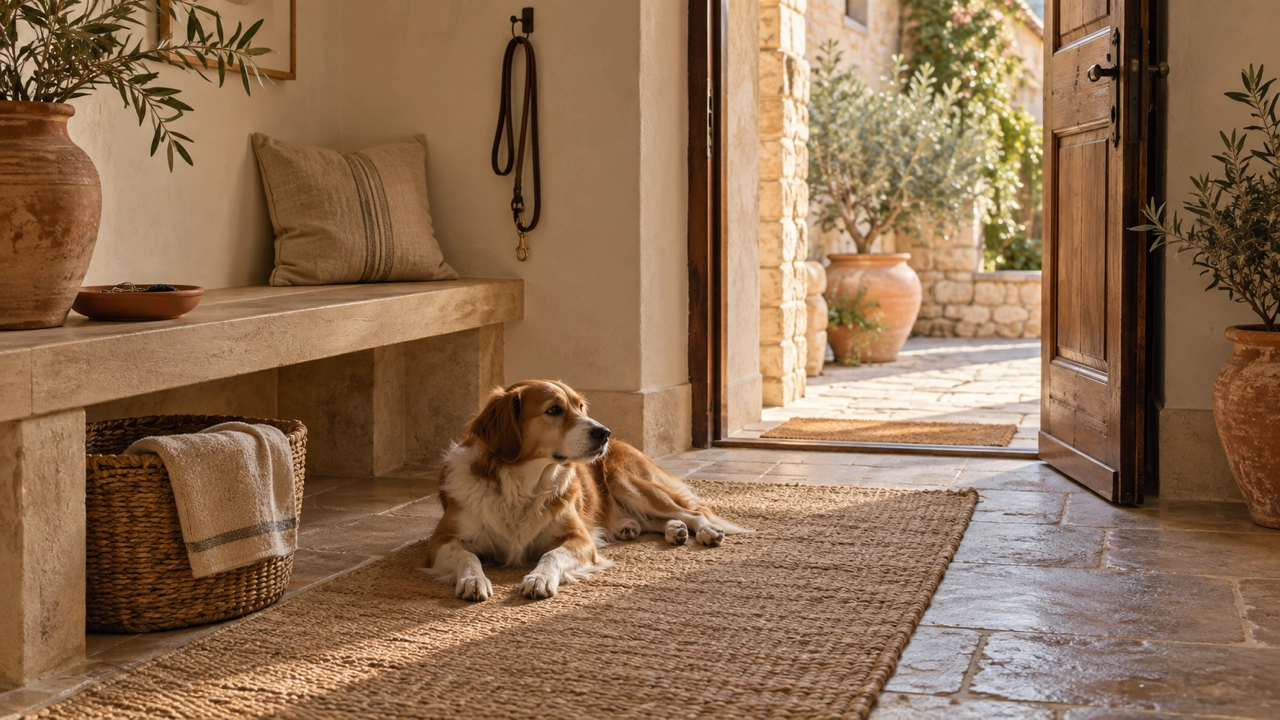
Keep the entry practical. A washable mat should be large enough for the dog to stand on, not merely decorate the threshold. Store a small set of towels within reach. Give leads and harnesses their own hooks, positioned so they do not trail across a bench or gather on the floor. A closed drawer or lidded basket can hold less attractive supplies.
If muddy walks are part of life, our guide to cleaning dog paws after a walk offers a simple routine. The interior design should support that routine without turning the entrance into a utility cupboard.
Choose floors for real movement
Flooring has to manage claws, water, shed hair and repeated cleaning. The right choice depends on the dog, the household and the condition of the building. Look beyond the sample board. Consider how the surface feels underfoot, how slippery it becomes when wet and whether its finish makes every mark conspicuous.
Textured surfaces and matt finishes often make daily wear less visually dominant than highly polished ones. Sealed stone, suitable porcelain tile and well-finished timber can all work in the right setting. The quality of installation and the care instructions matter as much as the material name.
Rugs add warmth and can provide grip, but they should earn their place. Choose sizes that sit securely rather than small pieces that shift under a turning dog. Low, dense textures are generally easier to maintain than deep piles that hold debris. Check that any backing or underlay is appropriate for the floor below.
Before committing to a finish, take home a sample if possible. Place it near the entrance for a few days. See how it handles dust, damp marks and the light in the room. Dog-proof home styling begins with honest observation, not a perfect showroom square.
Make furniture forgiving, not disposable
Durability does not have to look industrial. It comes from materials suited to the way the room is used.
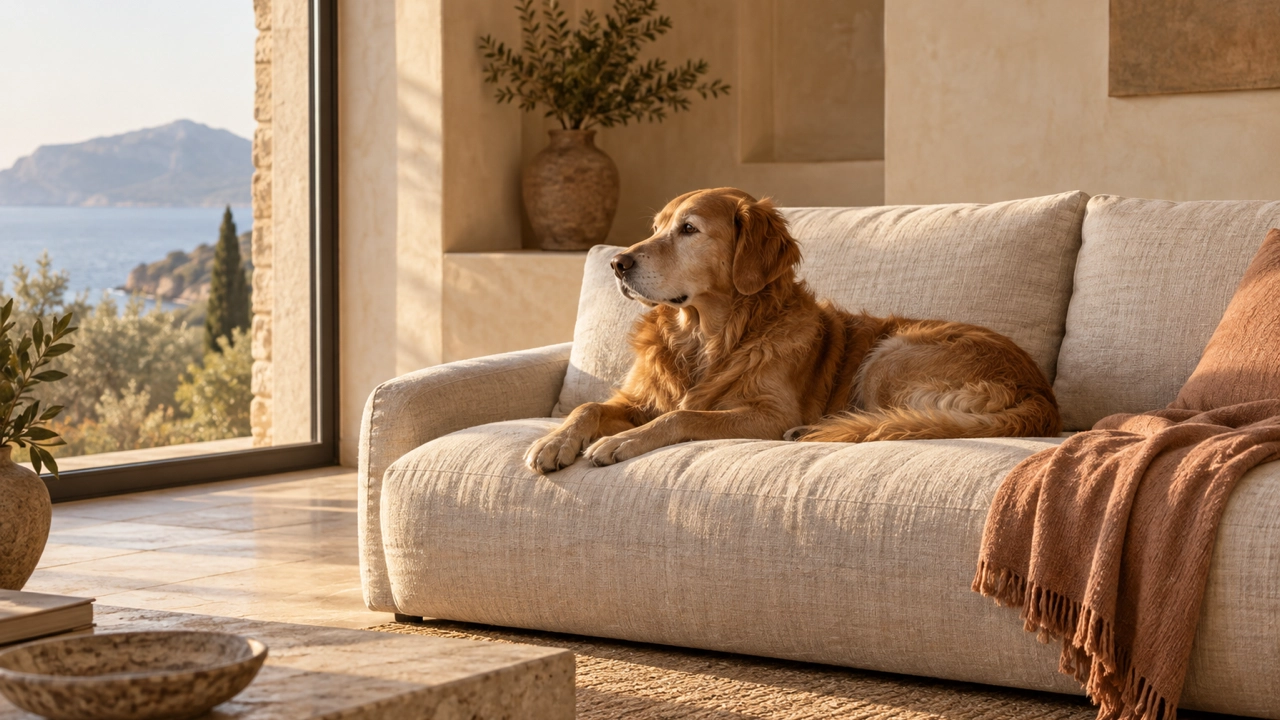
For upholstered furniture, ask for specific cleaning instructions and abrasion information rather than relying on labels such as “family friendly”. Tightly woven fabrics tend to offer fewer places for claws and hair to catch than loose, open weaves. Removable covers can make regular care simpler, provided they are practical to remove and clean.
Colour also affects how calm a room feels between cleans. A mid-tone fabric close to the dog’s coat will show less hair than a strongly contrasting surface. Flecked yarns, subtle texture and warm neutrals can soften the appearance of ordinary use without disguising neglect.
Consider the furniture shape. Raised legs make the floor easier to reach. A generous, stable side table is less vulnerable to a wagging tail than a delicate pedestal crowded with objects. Rounded corners can suit narrow circulation routes. None of these choices announces itself as pet-friendly interior design. That is the point.
Give the dog a proper place to settle
A dog bed works best when it belongs to the room rather than being pushed into whatever corner remains. Choose a quiet position with a view of household activity, away from the main path between doors. Avoid placing it beside a radiator or in a draught simply because the space is empty.
In larger homes, one bed does not need to serve every routine. A simple mat near the kitchen or desk can offer a clear place to rest while people are busy. This is often more useful than allowing the dog to improvise in a doorway.
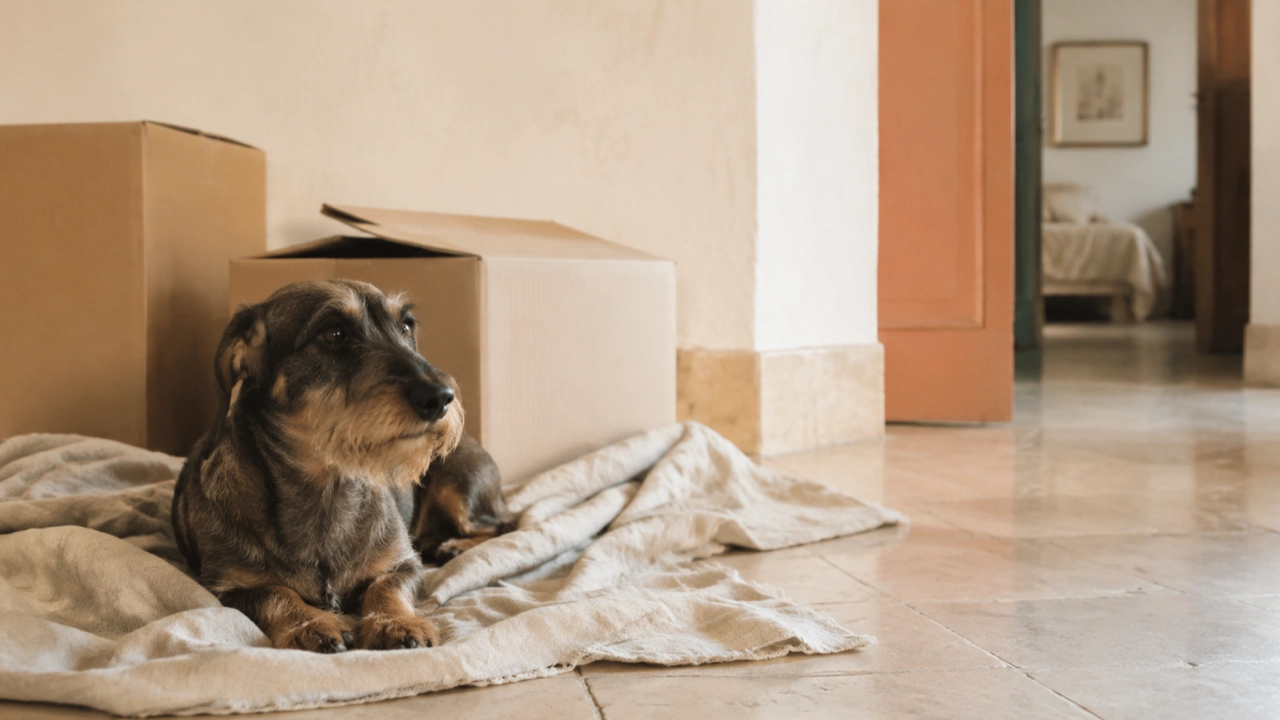
Keep the surrounding area visually quiet. A bed, one nearby basket and enough open space are usually sufficient. If the dog is adjusting to a new environment, read our guide to helping a dog settle after moving house before expecting the room to do all the work.
Contain food and water without hiding them
Feeding areas need a stable, easy-to-clean surface and enough room for the dog to stand comfortably. They do not need an elaborate fitted station.
Place bowls away from narrow routes where feet can catch them. A low-edged mat can contain drips and crumbs, but should lie flat and be simple to wash. Keep food storage close enough to make the routine easy, in a container suited to the food manufacturer’s guidance and inaccessible to the dog.
Water deserves particular thought. It should remain easy for the dog to reach and easy for a person to refresh. Protect vulnerable floors beneath the bowl rather than reducing access to avoid occasional splashes. If one location creates a constant collision, move the bowl. A decorative arrangement is not successful when everyone has to step around it.
Design around hair, not against it
No interior will prevent shedding. It can, however, make it less laborious to manage.
Use closed storage for textiles that should stay hair-free. Keep everyday throws washable and limit the number of decorative cushions that require separate care. Leave enough clearance beneath furniture for the cleaning tools you actually own. A low cabinet that blocks the vacuum by a few millimetres creates a surprisingly durable strip of dust.
Establish a small grooming point where brushes and towels live together. It might be a bathroom drawer, an entry cupboard or a basket near an outdoor door. The right location is the one that makes a two-minute brush more likely to happen before loose hair reaches every room.
Keep hazards out of the composition
A considered room also accounts for what a dog may reach. Route loose cables away from resting and play areas. Keep medicines, cleaning products and small swallowable objects behind closed doors. Before bringing plants into the home, check whether they are suitable for a household with dogs and place them accordingly.
Open shelving at nose height deserves restraint. Leave lower shelves empty, use them for robust objects or add closed storage. This protects the dog and creates a cleaner visual line. Good safety decisions often improve the room.
Agree on a few house rules
Materials can only do part of the work. Decide where the dog is welcome, where outdoor gear belongs and what happens on wet days. Keep the rules simple enough for everyone in the home to follow.
If the sofa is allowed, place a washable cover where the dog usually rests rather than repeatedly moving them. If a room is off limits, use a consistent boundary instead of relying on an obstacle course of chairs. If paws are cleaned at the door, prepare the towel before opening it.
Consistency keeps the interior calmer. It also reduces the need to correct the dog for navigating an arrangement that changes by the day.
A well-designed home absorbs the evidence of shared life without trying to erase it. There will still be hair on a rug and a lead by the door. The aim is not perfection. It is a space where care, cleaning and rest all have an obvious place.
Join the Ottimo Plus waitlist for considered dog essentials designed around everyday life together.