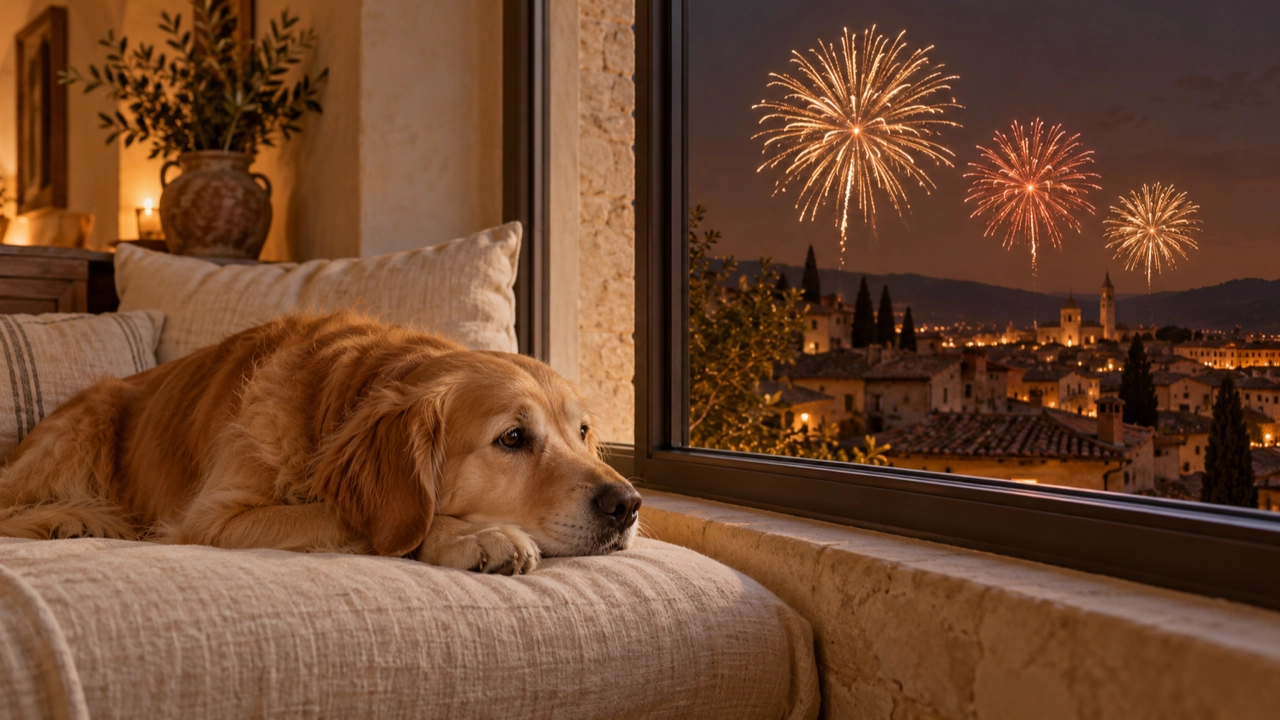
The first firework cracks somewhere down the street, and your dog is already on their feet. They pace, pant, press against your legs or vanish under the bed. The bangs arrive without warning and often last far longer than anyone in the house expects.
Fireworks are hard to predict, so the best approach covers the whole season rather than one night. Prepare early, make the evening quieter and let your dog decide how close they want to be. Most of this is practical home management, not training. It works best when it starts before the sky lights up.
Build a safe space before you need it
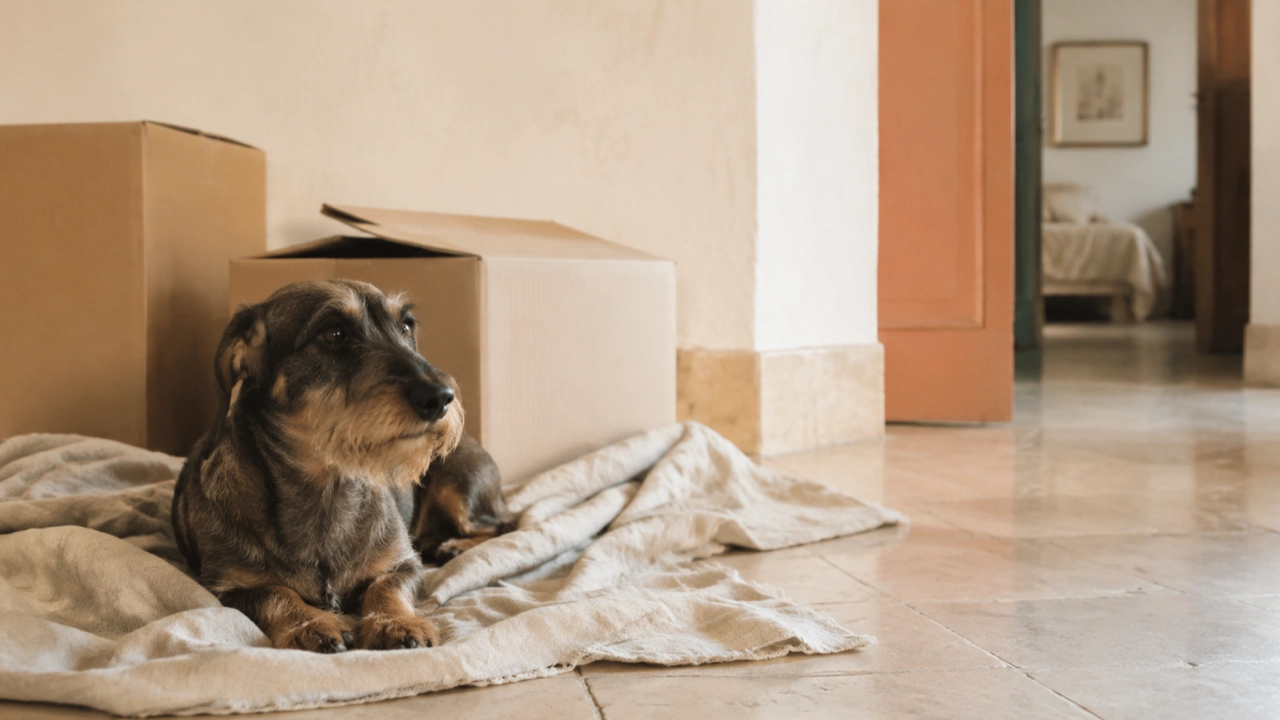
A safe space only works if your dog already trusts it. Choose a quiet room or corner away from the front door and from windows that face the street. Place a bed or blanket there, along with a water bowl and a chew or lick mat if your dog enjoys them.
Let your dog use the space all year. Reward them for choosing it, and never send them there as a punishment. A place associated with being told off will not feel like shelter when the bangs begin. Do not introduce it for the first time in the middle of a display.
If your dog already uses a crate, it can serve the same purpose with the door left open, provided it is comfortable and properly sized. Our guide to whether your dog really needs a crate explains why a resting space should always feel like a choice rather than confinement.
Introduce the sound gradually
Sound sensitivity usually improves with gradual exposure, a process trainers call desensitisation. Play a recording of fireworks at a volume so low that your dog barely notices it. Pair the sound with something good: a meal, a game or a chew. Over several short sessions, raise the volume very slowly.
Keep each session brief, once or twice a day, and start weeks before the season if you can. Stop as soon as your dog shows worry. Watch for lip licking, yawning, a tucked tail, panting or refusing food. If you see any of these, lower the volume and end on a calm moment. Pushing through fear teaches very little beyond the fear itself.
Choose rewards carefully. A worried dog may ignore food they would normally eat, so find something they still accept under mild stress. Progress shows up as relaxation over weeks, not as a single perfect session.
Plan the evening before dark
Fireworks often start after dark, so most of the practical work happens earlier in the day.
Take your dog out for a relaxed walk in the late afternoon and give them time to toilet. Keep the outing unhurried, so they are settled at home before the evening noise begins. If you need to walk after dark, our guide to walking a dog safely in the dark covers visibility and calm handling.
Offer a light meal a few hours before the loudest part of the night. An anxious dog may refuse food, so do not force it, but a settled stomach is more comfortable than an empty one.
Secure the home before dusk. A frightened dog can bolt through a gap in the fence, a door left ajar or a window pushed open for air. Close the gate, keep your dog indoors once the fireworks start and check that their collar and tag fit well. Confirm the microchip details are current. A dog who escapes is much harder to find when the streets are full of noise.
Soften the sound and the light
When darkness falls, reduce the things you can control.
Close the curtains or blinds to soften the flashes, and shut the doors and windows to muffle the bangs. Keep a radio, television or music playing at a steady, moderate volume. A familiar background sound can help soften sudden noises, which are usually more startling than a constant hum. The volume should never be loud enough to make your dog jump.
Keep the room ordinary. Stick to your usual routine where you can, keep lights low and steady rather than switching them on and off, and avoid moving your dog from room to room during the loudest moments. Do not take your dog into the garden to watch the display, and never leave them outside alone.
Let your dog choose how to cope
Some dogs want company. Others want a quiet corner, a hiding place or the space under a table. Let your dog choose.
Comforting a frightened dog is fine. Speaking softly, sitting beside them or offering a gentle stroke does not reinforce the fear. What helps more is staying steady yourself, because dogs read our body language closely. If you are tense, your dog will probably notice.
Do not drag your dog out of hiding or insist they come to you to prove they are fine. Let them move between spaces as they need. If your dog cannot settle and keeps pacing, offer two calm places to choose from rather than directing them to one.
If you can be home, be home. A dog who is alone and panicking has fewer ways to feel safe. If you have to go out, arrange for someone to check in, and keep the routine as close to normal as possible.
Think carefully about products
Calming wraps, pheromone diffusers, supplements and sound-blocking gear are sold widely for firework nights. Some owners feel they help, and many dogs show little change. Marketing rarely tells you how a product will work for your particular dog.
Treat any product as one small part of the plan. Introduce it well before the night so you can see how your dog responds, rather than trying it for the first time at midnight. Check that any wrap or garment never restricts breathing or movement. Speak to your vet before giving any supplement, particularly if your dog takes medication, has a health condition or is very young or elderly.
Be wary of anything that promises to cure the fear. Changes in noise sensitivity tend to be gradual, and they come from planning and repetition rather than a single purchase.
Know when to ask your vet
Most dogs find fireworks unpleasant but manageable with planning. Some find them distressing enough to need professional help. Speak to your veterinarian if your dog:
- injures themselves trying to escape, for example at doors, windows or fences
- panics for a long time after the noise has stopped
- stops eating, drinks very little or has accidents indoors when they are usually reliable
- becomes more fearful with each season
Your vet can check for pain or other causes and discuss options, including medication where appropriate. A qualified reward-based trainer or behaviourist can help build a longer plan. Do not give a sedative without veterinary advice.
The best firework night is usually the most uneventful one. Plan early, keep the room calm and let your dog choose their place within it. A secure, familiar space helps on every other noisy day too.
Join the Ottimo Plus waitlist for considered dog essentials designed around everyday life together.