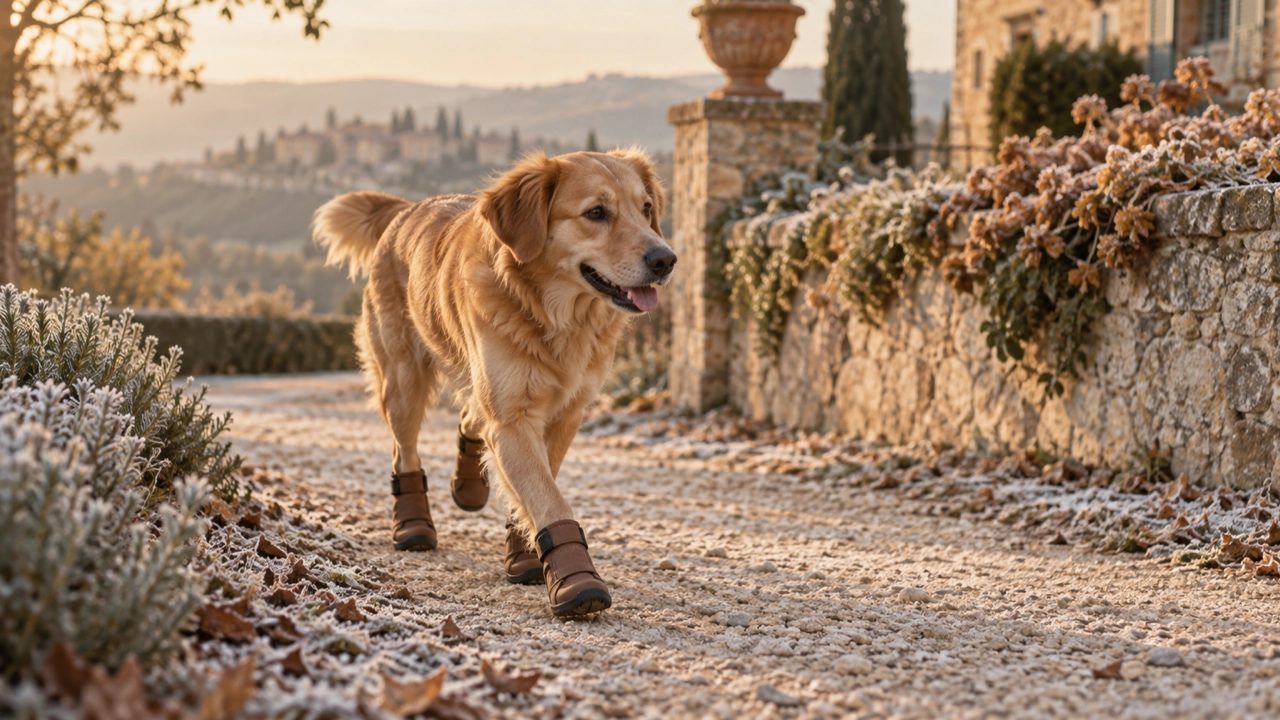
Some dogs take three steps in boots and lift each foot as if the floor has changed shape. Others walk straight out the door. Neither reaction tells you whether the boots are worth owning. The useful question is what you need them to do on the ground your dog actually crosses.
So, are dog boots worth it? Sometimes. They can put a physical layer between paws and winter salt, rough rock or a slick kitchen floor. They can also rub, slip off or make a normal walk harder. Good gear solves a specific problem without creating a new one.
When dog boots earn their place
Salt and winter ice. De-icing products can irritate paws and lodge between toes. Ice and compacted snow can make treated pavements uncomfortable, especially over a longer route. A well-fitting boot limits direct contact. It does not make an icy path safe to walk: the sole still needs grip, and you still need a route you can navigate together. For a broader cold-weather decision, see how cold is too cold to walk a dog.
Sharp or abrasive ground. Scree, coarse gravel and jagged trail surfaces can wear or cut pads. Boots may help on a particular stretch, especially if your dog is not used to that terrain. On a maintained path, many dogs are better off without them. If you are planning a first outing, our first hike with a dog checklist is a reminder not to debut unfamiliar gear at the trailhead.
A healing paw. A boot may keep a dressing cleaner or protect a tender area during a brief trip outside. It is not a treatment for a cut or a substitute for finding out why a dog is limping. If the paw is injured, ask your veterinarian what covering, if any, is appropriate. Keep a protective boot dry, inspect underneath it, and follow the care plan rather than leaving it on all day.
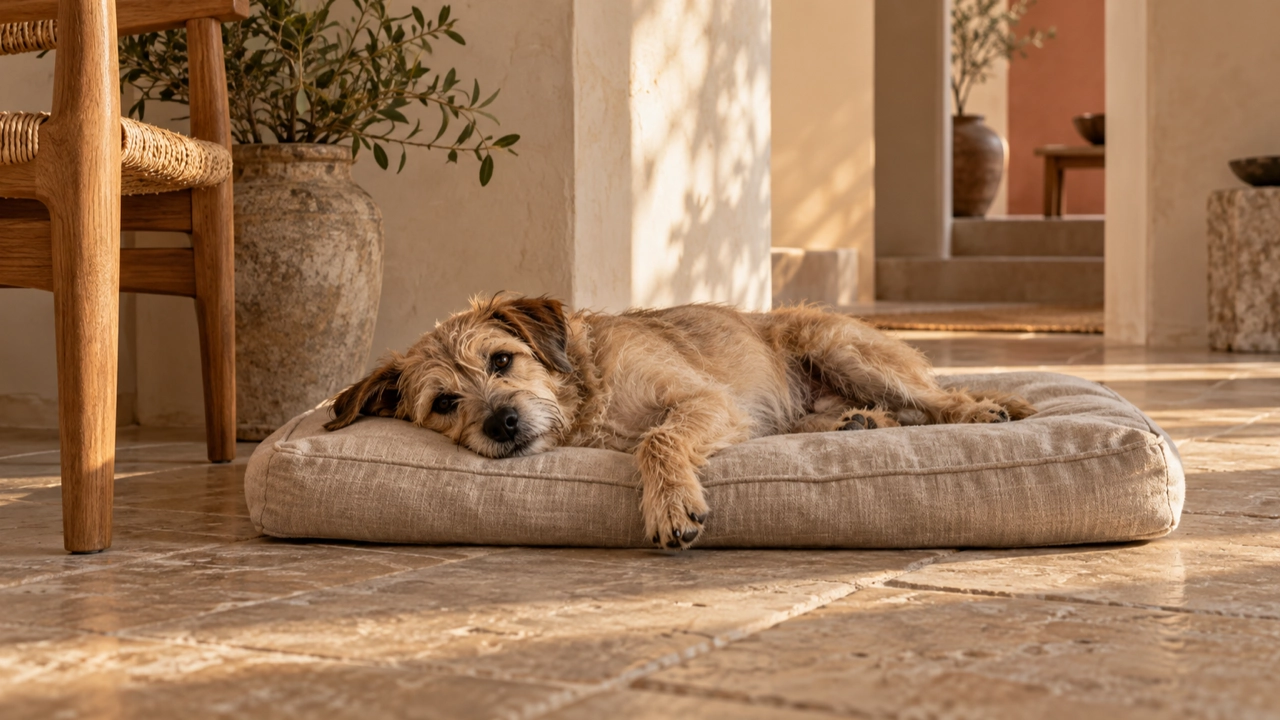
Traction indoors. Some older dogs struggle to stand or turn on polished floors. Grippy footwear can offer traction, but it has to stay in place and let the dog move naturally. Rugs or runners along the usual route may be a simpler first change. If slipping is new or getting worse, speak to your veterinarian rather than assuming the floor is the only issue.
These are situations, not a standing dress code. Do dogs need shoes for an ordinary dry neighbourhood walk? Usually not. A dog moving comfortably on familiar ground does not need extra equipment just because it exists.
Hot pavement needs a different answer
You may see boots recommended for summer streets. A sole can reduce direct contact with a hot surface, which is why they sometimes appear in paw-care advice. But covering the pad also traps heat around it. Paws help dogs release heat, and a boot does not cool the rest of a dog walking through hot air. Footwear is not a good plan for making a midday pavement walk acceptable.
Change the walk instead. Go early or late when the surface has cooled. Choose grass, shade and shorter routes; skip the outing if you cannot avoid the hot stretch. The commonly shared five-to-seven-second back-of-hand check is a rough rule of thumb, not a measurement of what is safe for every dog. Check the ground, but also watch the weather and your dog’s comfort. If the pavement feels too hot, do not rely on boots to justify staying out.
Dog boots vs paw wax
Paw wax is a barrier, not footwear. It can help limit contact with salt and ease some friction on everyday winter walks. It is light, quick to apply and does not change the way a dog places its feet. That makes it a reasonable first choice for a dog who finds boots distracting, provided the terrain is not sharp and the conditions are mild enough for the walk itself.
Wax wears away. It will not stop a sharp edge from cutting a pad, give an older dog the same grip as a suitable sole or protect an injury that needs covering. It does not solve hot pavement either. For salty walks, wipe and dry the paws afterwards whether you used wax or boots. Our guide to cleaning dog paws after a walk covers the small checks that matter once you get home.
The choice is less about which product is better and more about the job. Use a light barrier for light exposure. Consider boots for sustained contact with salt, rough ground or a specific traction problem. Use neither when a change of route does the work more comfortably.
Fit matters more than features
Measure each paw while your dog is standing, with weight on it and toes spread naturally. Trace or measure the widest part, then compare it with that maker’s size chart. Front paws can differ from back paws, so check both. Do not choose a size by breed alone. A boot should allow the toes to sit comfortably without leaving so much room that the foot slides inside.
Fasten it securely, not tightly. You should be able to check for rubbing around the opening and avoid pinching fur or skin. Walk a few steps on a safe surface. Does the boot rotate, fold under the paw or drift down? That is not something your dog should simply learn to tolerate. Try a different size or shape before taking it outside.
Consider the sole as well as the upper. It needs enough grip for the intended surface, enough flexibility for a natural stride and a closure you can adjust without fighting your dog’s leg. More straps or thicker material do not automatically mean more protection. The best pair is the one your dog can move in, that stays put, and that you will actually check during a walk.
Introduce them before you need them
Start indoors on a non-slip floor. Let your dog sniff a boot, fit one briefly, reward calm movement and take it off. Repeat with short sessions before trying a few steps, then gradually add the other paws. The exaggerated first steps are common, but persistent freezing, frantic pulling or an altered gait mean you should slow down or reconsider the fit.
Your first outdoor test should be short, familiar and easy to turn back from. Stop to check that each boot is still aligned. Afterwards, look for redness, dampness, trapped grit or rubbed fur. Dry the boots and the paws. A boot that performs beautifully for five minutes indoors may behave differently on wet gravel.
Do you need two boots or a full set? Buy for the actual surface. A single protected paw may be enough when following veterinary advice for an injury. If only the front paws show wear on a specific trail, a front pair might be useful. On salted streets, all four paws can contact the ground, so a full set may make more sense. Do not assume a two-pack fits every paw equally; measure front and back separately. Keep in mind that mixed footwear can change traction, so watch how your dog moves.
The mistakes worth avoiding
The most common mistake is buying boots for a problem you could avoid by changing the route or time of day. Close behind are guessing the size, introducing all four boots at the start of a long walk, and leaving them on after they have become wet or twisted. A boot can hide a sore spot as easily as it can protect one.
Check the paws before and after use. Retire a pair that keeps slipping or rubbing. If your dog limps, refuses to bear weight or has a wound that does not settle, stop the walk and seek veterinary advice. Boots are useful equipment, not a reason to ignore discomfort.
Good dog gear should make an ordinary routine easier, not more elaborate. Choose boots when the ground gives you a clear reason. Otherwise, let the paws do what they do well.
Join the Ottimo Plus waitlist for considered dog essentials designed around everyday life together.