Most first hikes don’t go wrong because of anything dramatic. They go wrong because of three ordinary mistakes: too much distance, too little water, and a bag full of gear that never gets used. None of that requires trail experience to avoid — it just requires knowing what actually matters before you’re twenty minutes in.
Start shorter than feels necessary
The instinct on a first hike is to match the trail to your own fitness, not your dog’s. That’s the wrong measure. A dog that walks fine around the neighborhood every day isn’t automatically ready for three hours of uneven ground, elevation change, and unfamiliar smells pulling their attention in every direction.
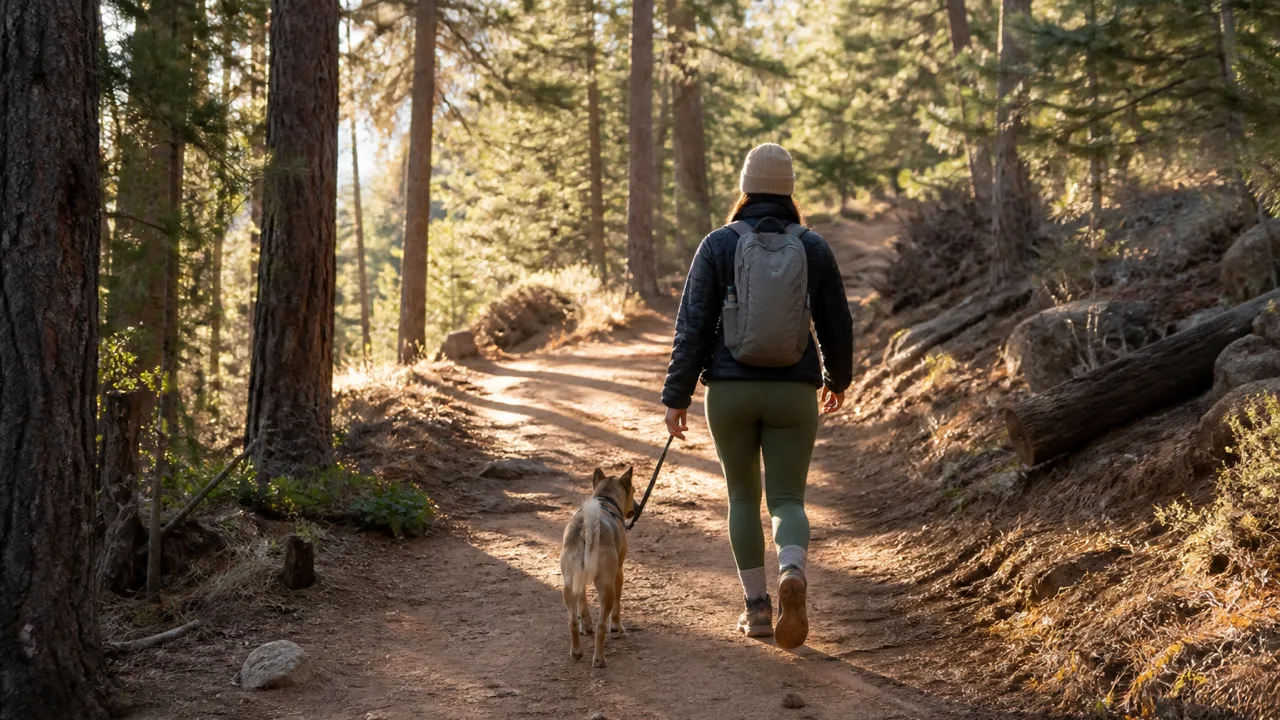
A reasonable first outing is 2–3 miles on a well-marked, moderate trail — short enough to finish with energy left over, long enough to actually tell you something. Watch how your dog handles it: energy at the end, normal recovery that evening, no stiffness the next morning. That response is what tells you whether the next hike can go longer, not a guess based on breed or age alone.
The gear that earns its place
A first-hike bag should be small enough to forget you’re wearing it. Everything in it should answer a real question, not a “just in case.”
- Water for two, not one. Bring roughly what you’d carry for yourself, then add more — a dog can’t tell you they’re thirsty until they’re already behind on it.
- A collar with current ID, plus a well-fitted harness. A harness distributes pressure across the chest instead of the neck, which matters more on uneven ground where a dog might lunge or stumble.
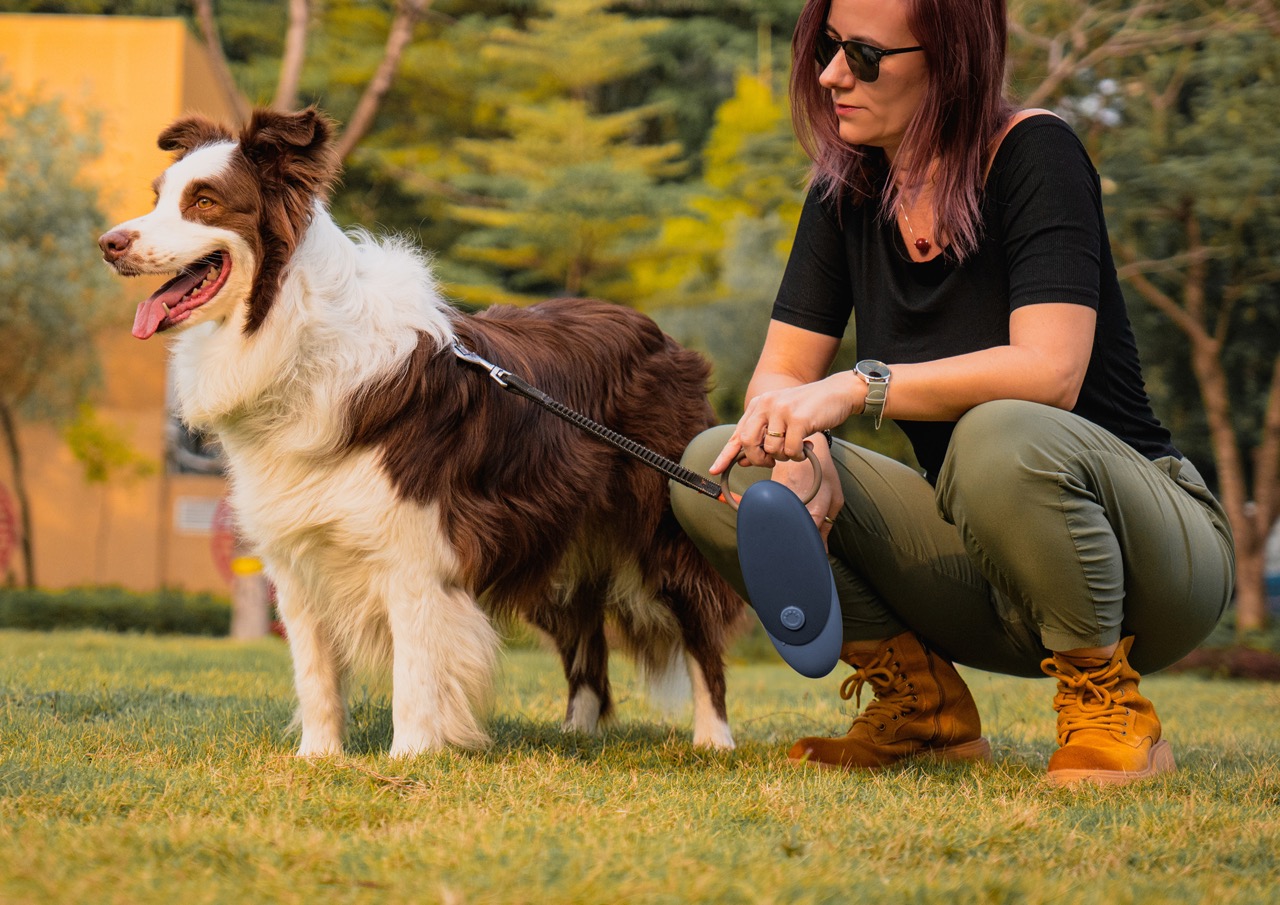
- A leash long enough for some slack, short enough for control near other hikers. Four to six feet covers most trail situations.
- Waste bags — more than you think you’ll need. Trailheads run out of dispensers faster than people expect.
- A basic first-aid item or two: something to flush a paw pad cut, and a way to check for ticks afterward.
That’s close to the full list. Anything beyond it is usually there to make the hiker feel prepared, not to solve a problem the dog will actually have.
Before you leave the house
A few minutes of research prevents most first-hike problems before they start.
- Check the trail’s dog policy, not just its difficulty rating. Some trails require a leash at all times, some restrict dogs entirely during nesting season, and county and national park rules often differ from what a hiking app shows.
- Check the weather for the trail’s elevation, not your home address. A trailhead can be 15 degrees warmer or windier than the parking lot, especially on exposed ridgelines.
- Pick a route with a real turnaround point, not just a total distance. An out-and-back trail lets you cut the hike short at any point without committing to a loop’s full distance.
- Go on a weekday or early morning if it’s your dog’s first time around other hikers and dogs. A crowded trailhead adds a layer of stimulation that has nothing to do with hiking itself, and it’s easier to judge how your dog handles the hike without it.
None of this takes long, and all of it moves problems from “discovered on the trail” to “known before you park the car” — which is the difference between a minor adjustment and an actual bad day.
Reading your dog on the trail
The most useful skill on a first hike isn’t gear — it’s attention. Panting that doesn’t ease during a break, reluctance to keep moving, or noticeably slower pace are all signs to stop and reassess, not signs to push through for the sake of finishing. A closer look at hydration signs on the trail covers this in more depth, and the same signals apply whether it’s a dog’s first hike or fiftieth.
Water access matters more on a first hike than on a familiar one, simply because you don’t yet know your dog’s pace or how they handle new terrain. Otto’s rotating cap turns into a bowl in one motion, which matters most exactly here — a first-timer already juggling a leash, a map, and an unfamiliar trail doesn’t need a separate bowl to dig out and pack away wet.
What to skip
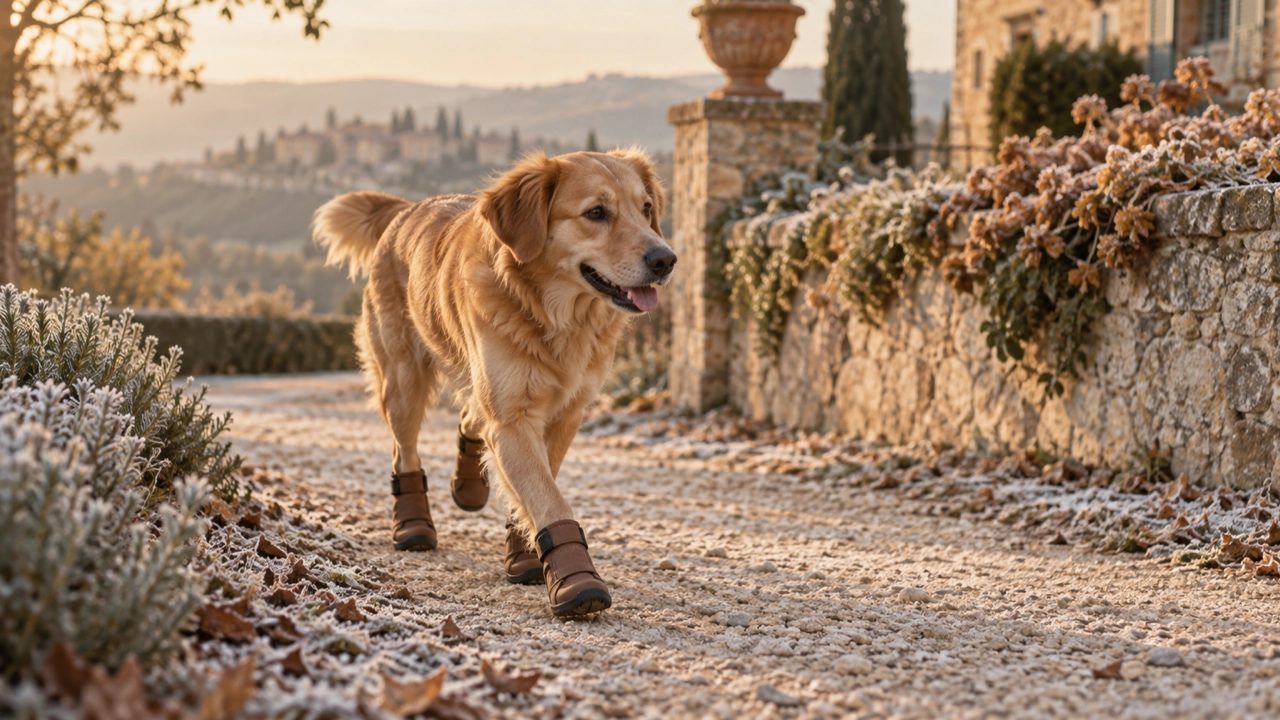
A few things that show up on generic packing lists but rarely earn their weight on a first, moderate hike: a full dog first-aid kit built for multi-day backcountry trips, a second collapsible bowl “as backup,” and boots — most dogs don’t need them on a well-maintained trail, and a first hike is the wrong time to introduce something new to their paws.
The pattern holds for gear the same way it holds for distance: the goal of a first hike isn’t to be equipped for everything. It’s to finish having actually enjoyed it, with enough left over — energy, water, patience — to want to do it again.
Figuring out how much activity is actually right for a given dog doesn’t stop at the trailhead, either — walkingdog.io’s guide to daily step counts is a useful reference for pacing that first hike, and the ones after it.