There is no single best length for every dog walk. The useful lead is the one that gives your dog enough room for the moment while leaving you able to keep everyone comfortable and safe.
A busy pavement, a quiet park edge and a recall session ask for different things. So does a small dog who pauses to investigate every doorway, a tall dog with a long stride, or a young dog still learning what a loose lead means. Rather than looking for one perfect number on a product label, start with the place, the purpose and the dog in front of you.
Begin with the space around you
On a narrow pavement, near traffic or at a crowded entrance, a shorter fixed lead makes communication simpler. Your dog can stay close without you gathering loops of material in one hand. There is less chance of the lead reaching across another person’s path, around a café chair or towards a bicycle wheel.
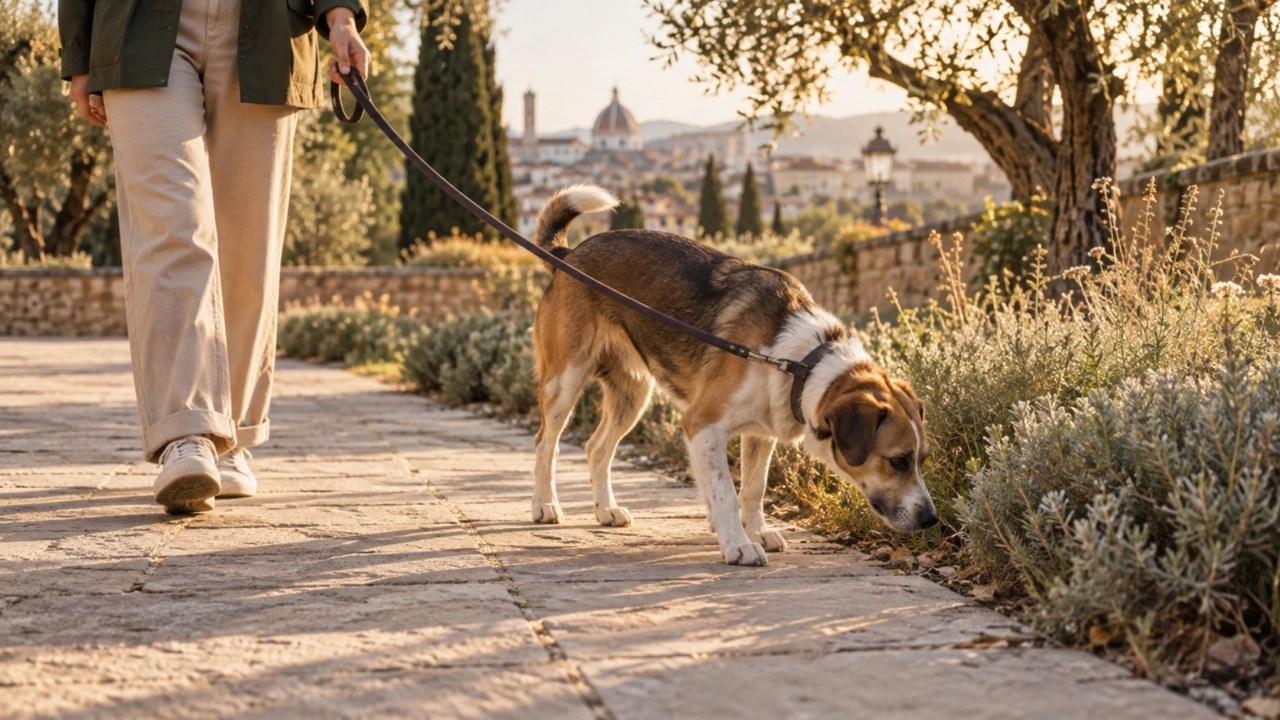
Short does not mean tight. Leave enough slack for your dog to walk naturally and turn their head. The aim is a calm connection, not a constant pull. If the lead is always taut, changing its length alone will not solve the problem; pause, create distance from distractions and work on loose-lead walking in an easier setting.
On a quiet, open route, a little more room can make the walk feel less like a procession. Your dog can choose a patch of grass, pause to sniff and move at a slightly different pace without taking you by surprise. That freedom still needs boundaries. Before giving more line, look for roads, other dogs, wildlife, blind corners and the local rules for that space.
The American Kennel Club’s guide to urban dog skills makes the same practical distinction: close city walking calls for a short lead and a dog who can stay with you. The setting, not a trend, sets the requirement.
Think in three useful lengths
For many everyday walks, a standard fixed lead is a sensible starting point. It is easy to hold, quick to shorten temporarily and predictable for both of you. It suits ordinary streets, appointments and any place where passing people need to know where your dog will be.
A longer fixed lead can suit a quieter route when you want a little more room without introducing a new handling system. It works best when you can see the space ahead and keep the extra length from trailing through mud, puddles or another dog’s path.
A long line is a different tool. It is useful for carefully planned training or safe open-ground exploration, not simply a longer version of an everyday street lead. It takes practice to manage without tangling around legs, furniture or other dogs. Start in a low-distraction space, use gloves if the material could slide quickly through your hands, and gather it before you need it. A long line can add distance; it does not replace recall, attention or local access rules.
If you are unsure, begin shorter in a new place. You can offer more space once you understand the route and your dog is settled.
Match the lead to the dog’s current skill
Lead length should make a lesson easier, not conceal a problem. A dog learning to walk beside you benefits from clear, repeatable conditions: a quiet route, a manageable distance and rewards for choosing to stay close. The AKC’s loose-lead training guidance recommends building the skill gradually and rewarding the position you want rather than assuming a dog already understands it.
That does not mean every walk should look like a formal heel. A polite walk can include pauses, sniffing and changes of pace. The question is whether your dog can respond when you need them to. If a runner appears, can you shorten the lead smoothly? If a child wants to pass, can your dog move with you without a sudden lunge? If not, reduce the difficulty rather than giving more line.
Dogs who pull strongly need individual attention, especially if either of you feels unsafe. Avoid wrapping a lead around your hand or relying on your strength to stop a sudden movement. A qualified, reward-based trainer can help you build handling and walking skills that suit your dog and your regular environment.
Treat retractable leads as their own category
Retractable leads can feel convenient because their length changes at the press of a button. They also ask for fast judgment. The line may be difficult for other people to see, and a dog at its full distance can reach something before you can close the gap.
The AKC’s safety guide to retractable leads advises teaching polite walking on a standard lead first. It also notes that too much slack can make supervision harder. That is a useful rule wherever you walk: only give the distance you can manage calmly.
If you use a retractable lead, learn the brake and lock while standing still. Check the tape, clip and handle regularly. Keep it short around traffic, people, dogs and anything your dog may rush towards. Never let the lead unspool at speed until the end becomes a jolt for either of you.
Let the route change your setup
It is reasonable to own more than one lead. Keep a dependable everyday option by the door, and bring a longer line only when you have planned a place where it makes sense. Swapping tools is not overthinking; it is part of matching equipment to the job.
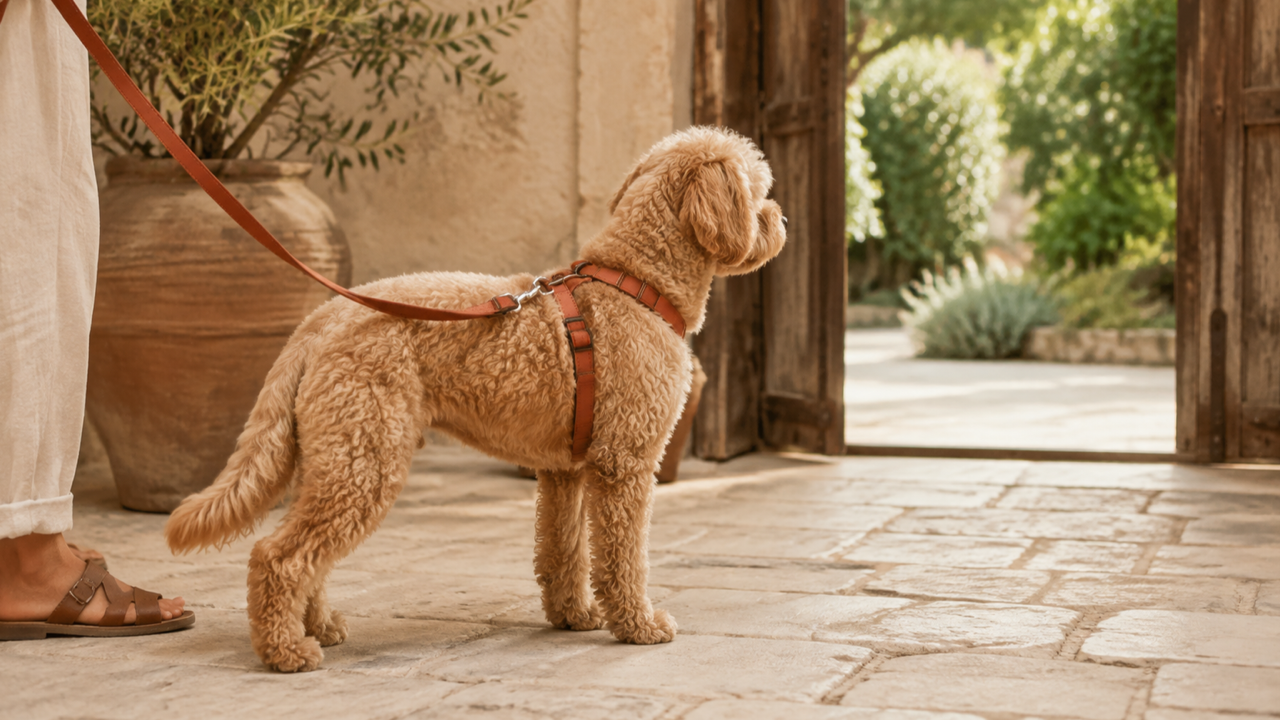
Before leaving, check the clip, stitching and any worn sections. Attach the lead to equipment that fits your dog comfortably and is appropriate for their behaviour. Our guide to how a dog harness should fit can help with the other half of that decision.
On the walk, adjust early. Shorten before the pavement narrows rather than when someone is already beside you. Offer more room after you have reached the quieter path, not while you are crossing to it. These small changes make the lead feel like information instead of a restraint.
Choose control that still leaves room for a dog to be a dog
The best lead length is not the longest possible and it is not automatically the shortest. It is enough distance for your dog to walk, look and sniff, with enough control for you to respond to the world around you.
Try one setup on a familiar route for a week. Notice where you repeatedly have to gather line, where your dog runs out of room, and when the walk feels easy. Those details will tell you more than a universal recommendation ever could.
Join the Ottimo Plus waitlist for considered dog essentials designed around everyday life together.