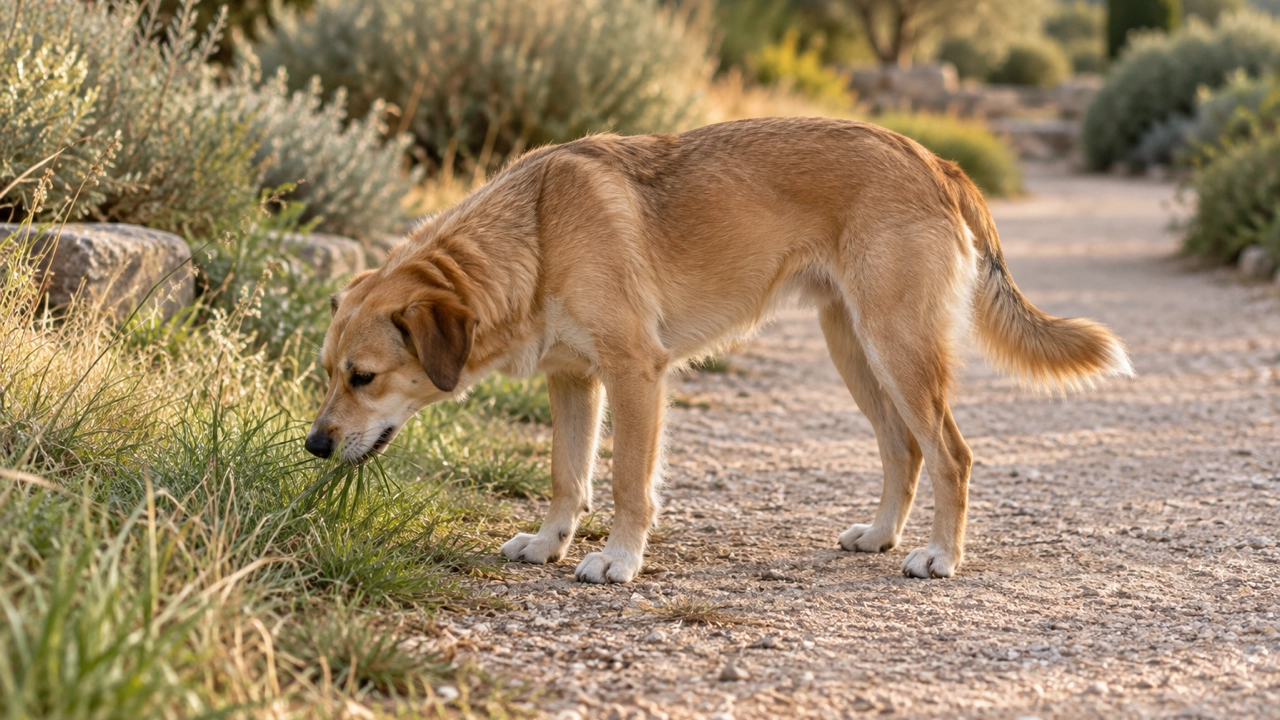
Most dog owners have seen it. Halfway round the usual loop, your dog stops, lowers their head and starts methodically eating grass. It looks odd, it sometimes ends badly on the living-room rug, and it raises a fair question: is something wrong?
For most dogs, most of the time, the honest answer is no. Grass eating is common, and vets generally consider occasional nibbling to be normal behaviour. The useful skill is knowing the difference between an everyday habit and the handful of situations that deserve attention.
This is general guidance for owners, not veterinary advice. If you are worried about your own dog, your vet is the right person to ask.
Why dogs eat grass: the usual explanations
Nobody has a single, proven reason, and it is likely that different dogs do it for different reasons. These are the explanations that come up most often.
- Fibre and texture. Some dogs seem to simply like the way grass feels and tastes, and it adds a little roughage. Many dogs will happily chew young, tender shoots.
- Taste and curiosity. Grass smells of rain, soil and every animal that crossed it earlier. Dogs investigate the world with their mouths as well as their noses, and a tasty patch is a patch worth sampling.
- Boredom or habit. A dog that is under-stimulated, or that has noticed grass-eating gets a reaction from you, may repeat it simply because it is something to do. Habits settle in quickly on a predictable route.
- A mildly upset stomach. Some dogs appear to eat grass when they feel a bit queasy, and some bring it back up afterwards. This is a common observation, but it does not mean grass is a reliable remedy, and not every dog that eats grass vomits.
- Attention. If a dog learns that eating grass makes a walk stop and an owner speak, that can become its own reward.
None of these is a reason for alarm on its own. A healthy dog that nibbles a few blades now and then, seems well, eats normally and carries on the walk is behaving like a dog.
Why vomiting once is not the same as a pattern
Owners often search for “dog eating grass and vomiting” because the two seem linked, and sometimes they are. Grass can irritate the stomach lining, and an occasional bout of grass followed by a single bout of vomiting, with a dog who then perks up and eats normally, is something many dogs go through.
What matters is the pattern. One brief episode in an otherwise well dog is a different story from repeated vomiting, or vomiting that comes with other changes. Which brings us to the signs worth acting on.
The warning signs
Grass itself is rarely the problem. The context around it is. Keep an eye out for the following.
- Repeated vomiting. More than the odd single episode, or vomiting that continues after the grass is gone. This is a reason to call your vet rather than wait it out.
- Vomit that contains something unusual. Blood, anything that looks like foreign material, or a large amount of undigested grass that keeps coming back.
- Other symptoms alongside it. Lethargy, loss of appetite, diarrhoea, drooling, a tender or swollen belly, repeated retching with nothing coming up, or difficulty passing stools.
- A sudden change. A dog that has never bothered with grass and now eats it compulsively, or a dog whose grass eating becomes frantic, frequent or hard to interrupt, is telling you something has shifted. The change is more informative than the grass.
- Swallowing things that are not grass. Dogs that eat grass sometimes swallow sticks, stones or litter while they are at it. If your dog seems to be gulping rather than grazing, or swallows anything it should not, mention it to your vet.
- Treated or contaminated grass. This one is about where, not why. Lawns, verges and parks may be treated with weedkillers, fertilisers or pest products, and the fact that a patch looks healthy tells you nothing about what has been sprayed on it. Warning signs, recently treated areas and anything that looks like spilled product are all good reasons to move on. If your dog has eaten from an area you suspect was treated and then seems unwell, call your vet promptly and, if you can, say what the product might have been.
None of this means every nibble needs a phone call. It means that a calm, practised eye on your dog’s overall condition tells you far more than whether they ate grass.
When to ring the vet
A simple way to think about it:
- Call your vet if vomiting is repeated, if your dog seems unwell in any other way, if you suspect they swallowed treated grass or something that is not grass, or if there has been a sudden, compulsive change in behaviour.
- Seek urgent help if you suspect poisoning, if your dog is repeatedly retching without producing anything, or if the belly looks swollen or painful. Do not wait to see whether they settle.
- Mention it at the next check-up if grass eating is frequent but your dog is otherwise well. Your vet may want to look at diet, worming, or digestive health in general.
You do not need to diagnose anything yourself. A short, factual description (what they ate, when, what happened afterwards) is what your vet needs.
Calm walk-time habits
If you would simply prefer your dog not to graze, a few habits tend to help.
Choose your spots. Known treated lawns, freshly mown verges and patches near roadsides are best avoided. Familiar, quiet green space is easier to read than somewhere new.
Redirect early. The easiest moment to interrupt is just before the head goes down. A cheerful change of direction, a quick treat or a short game costs you nothing and tends to work better than pulling them away mid-chew. Walking on a loose, comfortable lead helps; our guide to why dogs pull on the lead covers how to make that easier.
Teach a reliable “leave it”. A solid leave-it cue is useful far beyond grass. Practise it at home with low-value items first, reward generously, and build up gradually to the distractions of a real walk.
Give the nose a proper job. Some dogs appear to graze because the walk is not giving them enough to do. Time to sniff, explore and decide the pace is a good outlet, and our piece on why dogs stop and sniff on walks is worth a read if your walks tend to be rushed.
Keep the routine interesting. Vary the route a little, add short training moments, and bring a toy if your dog likes one. A dog that is engaged is less likely to wander off into the verge.
Don’t make it a drama. If grass eating becomes a standoff, many dogs repeat it for the attention. A calm, matter-of-fact redirect and a reward for coming away is usually kinder and more effective than scolding.
Check the basics with your vet. If grass eating is frequent, ask about your dog’s diet, how much fibre it gets and whether anything else is worth looking into. Do not change diet or add supplements on a guess.
One more thing: check afterwards
Long, overgrown grass is where dogs tend to graze, and it is also where ticks wait. If your dog has been rooting around in rough ground, a quick check when you get home is worth the two minutes; here is a calm tick-check routine that fits neatly at the end of a walk.
Keep it in proportion
Grass eating is one of the more common things dogs do that looks stranger than it is. Most of the time it is a harmless habit, a taste for something green or a way of passing the time between sniffs. The things worth your attention are the exceptions: treated or contaminated ground, repeated vomiting, swallowed foreign material, and sudden changes that come with other symptoms.
Know your dog’s normal, choose your grass with a little care, redirect without fuss, and make the call to your vet when something does not add up. That is nearly all there is to it.