Ask ten dog owners what makes a city good for dogs and you will get ten answers, each shaped by the dog standing beside them. The published rankings have the same problem. MetLife Pet Insurance’s 2026 Pawprint Index scored 49 major US cities on walkability, dog parks, veterinary access, pet-friendly businesses and pet-friendly rentals. Tampa came first, followed by Atlanta and Austin. New York placed 39th and Fresno came last. A separate 2026 ranking put Scottsdale on top, with Honolulu, New York and Boston at the bottom.
Neither list is wrong. They simply disagree about what “dog-friendly” means.
That disagreement is more useful than any single score. It suggests there is no title to chase, only a question worth asking again and again: does this place make your dog’s ordinary day easier or harder? Here is a practical way to judge a city the way a dog experiences it.
Start with the walk you take every day
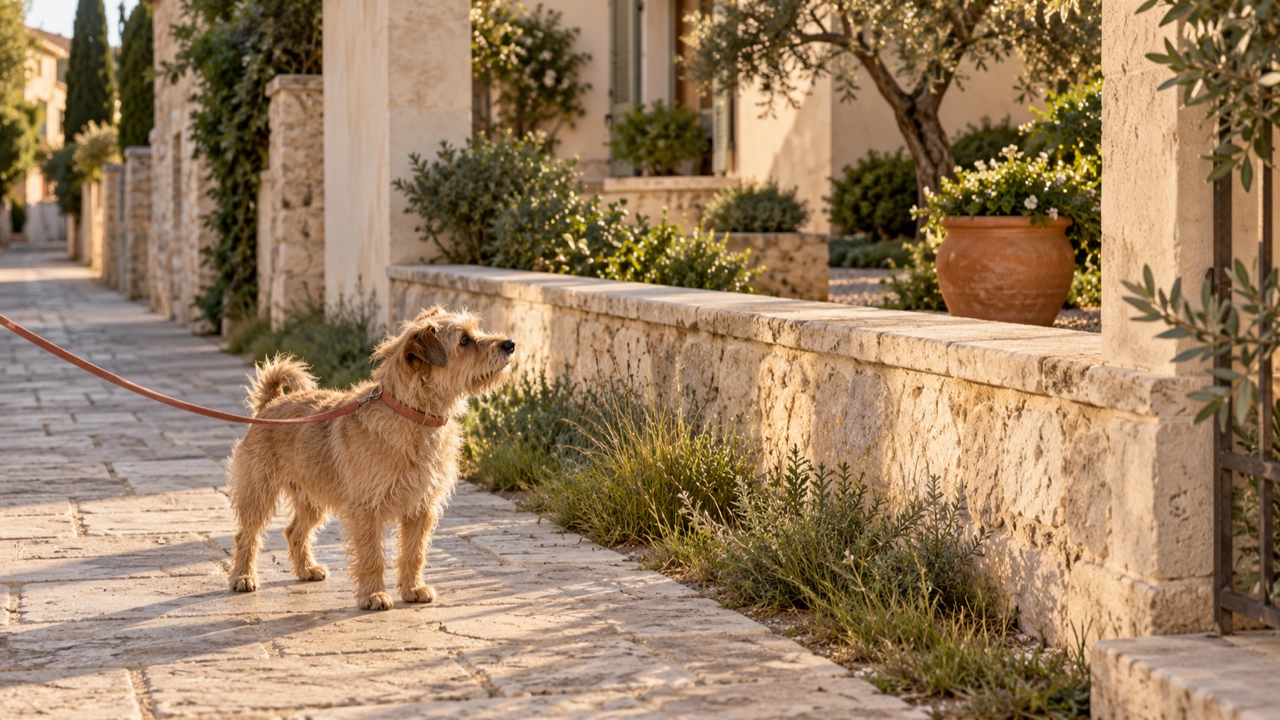
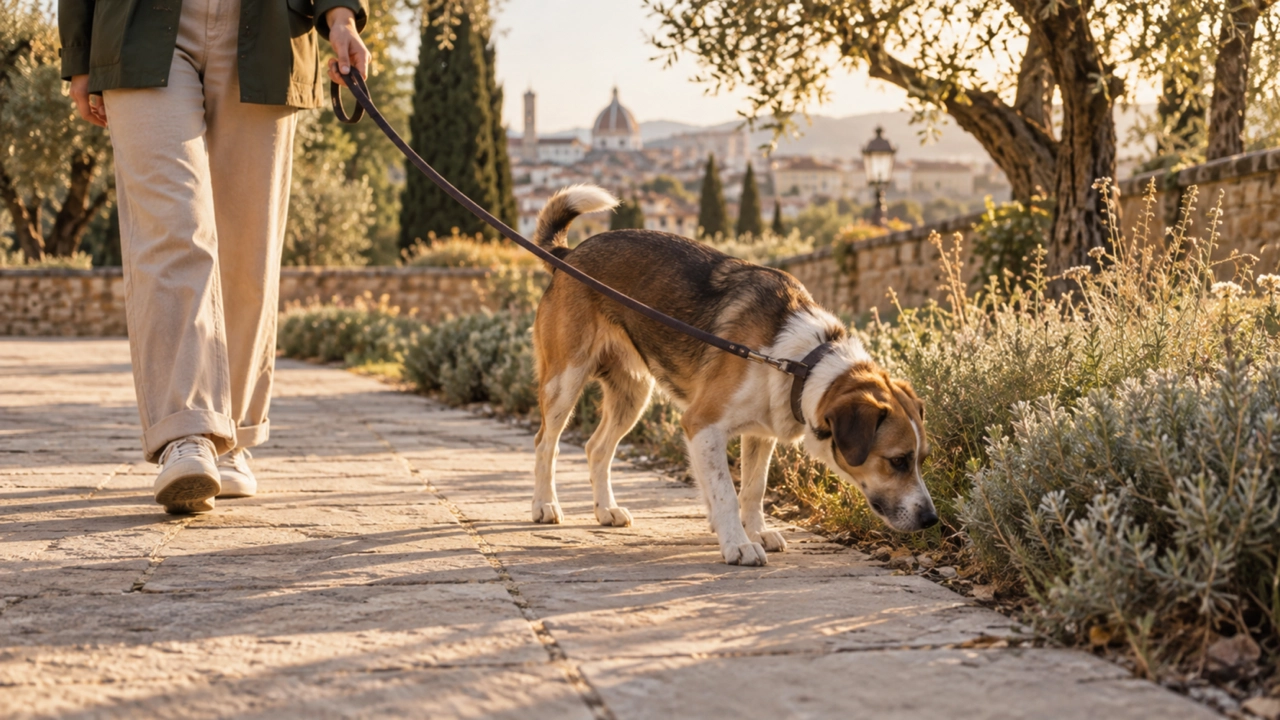
A dog’s life in a city is mostly pavement. Two walks a day, every day, in every season. That makes the ordinary route more important than any destination.
Look at the streets you would actually use. Are there alternative loops, or does every walk follow the same dense corridor? Are the pavements wide enough for a dog to step aside, or does every approaching pedestrian become an obstacle course? Are the crossings short and calm, or do they require waiting at a loud junction with traffic turning across you?
Pavement matters in summer too. Asphalt and dark stone hold heat long after the air has cooled. A route with deep shade, grass verges or a fountain between it and the sun is more comfortable than one exposed block after another. Walk the neighbourhood at the hour you would really walk it, not on a mild afternoon.
Treat shade and water as infrastructure
Green space is easy to count and easy to photograph. What a dog actually needs is cooler air and a drink.
A park with wide, unshaded lawns can be less useful in July than a short street with mature trees and a bench in the shade. Water is rarer than grass, and more valuable. Drinking fountains, café bowls, public taps and dog-friendly shops that offer a refill all reduce what you have to carry and how far you can comfortably go.
When you assess a place, count the drinking points the way you would count shops: how far apart are they, and are they open at the times you walk?
Ask what off-leash provision actually offers
“Dog park” covers a wide range of conditions. A fenced, double-gated space with separate areas for small dogs, good drainage and a surface that does not turn to mud is a different proposition from an unfenced field beside a road.
Look at the details that decide whether you would use it daily: gate design, secure fencing, whether the ground holds up after rain, whether there is shade, whether there is somewhere to sit. The size of the space matters less than whether a dog can move, rest and be called back safely within it.
If a city’s off-leash offering is thin, the pressure moves elsewhere. Owners improvise on quiet footpaths and playing fields, which creates friction that thoughtful provision would have avoided.
Read the rules before you need them
Rules decide how much of the city is genuinely available to you. Public transport is the clearest example. Conditions differ by city and network: some allow small dogs free in carriers, others require larger dogs to be muzzled, leashed and ticketed, sometimes at a reduced fare. Some restrict travel at peak hours altogether.
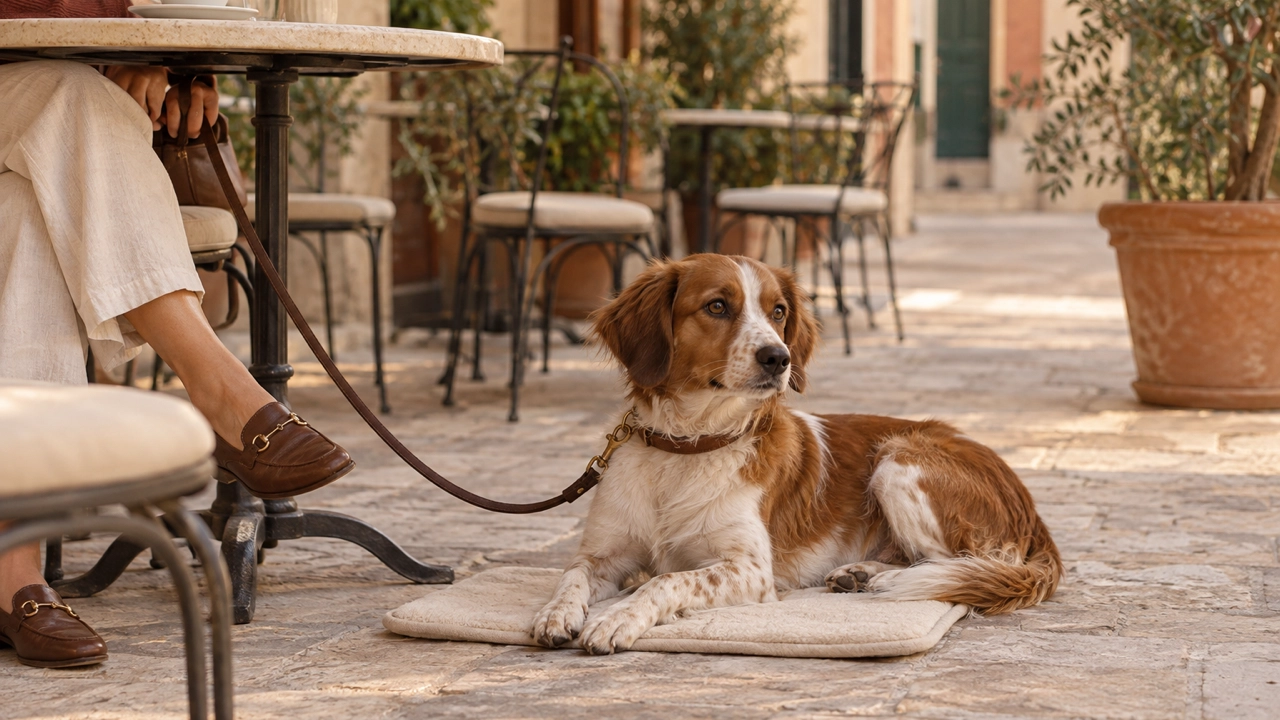
Dog-friendly hospitality has its own vocabulary. A café that welcomes dogs only on an outdoor terrace is not the same as one that accommodates them inside. Shops, hotels and markets each set their own terms.
This is not a reason to avoid a city. It is a reason to check the details before you rely on them, and to plan around the rules rather than discover them at the door. Our guide to preparing a dog for public transport covers the practical side of building up to that first journey.
Measure the distance to real help
Care is quiet infrastructure. You notice it only when you need it.
Proximity to a veterinary practice you would be happy to call matters more than the number of listings on a map, and the same is true of a clinic that can see an emergency at night. New York’s weak point in the 2026 Pawprint Index was exactly this: the study placed the city last for veterinary availability, with 1.2 highly rated clinics per 100,000 residents.
Before moving or committing to a long stay, find out where the nearest emergency clinic is and how you would reach it without a car. That single check tells you more about a city’s real dog-friendliness than its parks.
Notice the small daily friction
The routine details accumulate. Waste bins placed along popular routes, so a bag does not have to be carried for a kilometre. Pavements washed and drained rather than left slick. Water bowls outside shops. A shop that lets a dog wait while you pay.
Crowding matters too. A neighbourhood can be excellent at ten in the morning and unmanageable at six in the evening, when every pavement is busy and every doorstep occupied. Some of what feels unfriendly to dogs is really just a question of timing.
Weigh the climate, not the postcard
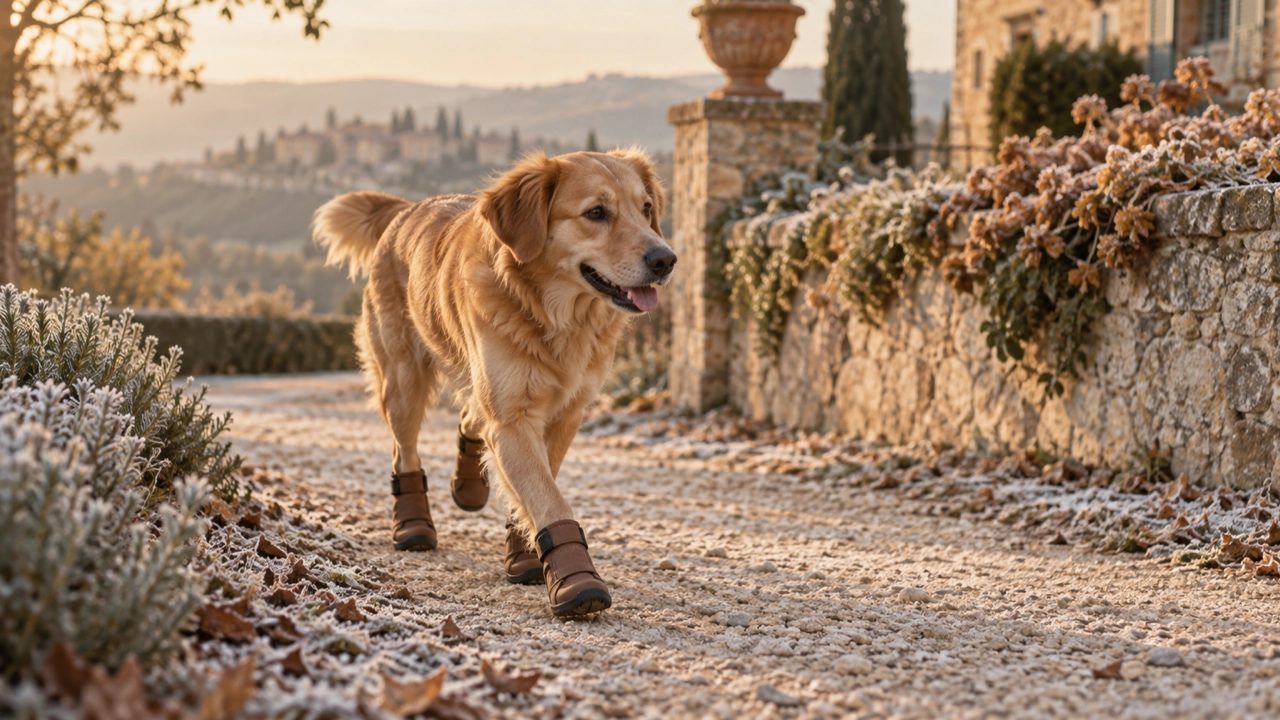
A city is partly a set of conditions you cannot change. Heat that makes midday walking unsafe for months, rain that keeps the ground wet from autumn to spring, winter salt that stings paws on every route: these shape how much of the year is genuinely easy.
Wind and humidity count for more than the average temperature suggests. So does the availability of indoor alternatives when the weather turns, from shopping arcades to covered markets. The best months should decide your visit; the hardest months decide whether you could live there.
Remember what you can control
You cannot redesign a city, but you decide a great deal about the part of it that is yours. Where the lead comes off, where wet paws are dried, where the bed sits, what happens when you come in from a wet walk: these belong to the home, and they can be planned rather than improvised.
That is the more immediate project, and it is the one our guide to designing a home that works with a dog covers in detail. The same test applies: judge the arrangement by the ordinary day, not by how it looks when everything is tidy.
A dog-friendly city is not a ranking or a badge. It is a collection of small decisions, made by planners and landlords and café owners and the person holding the lead, that together make an ordinary walk easier. Start by walking the route you would really take, at the hour you would really take it. Your dog will tell you the rest.
Join the Ottimo Plus waitlist for considered dog essentials designed around everyday life together.