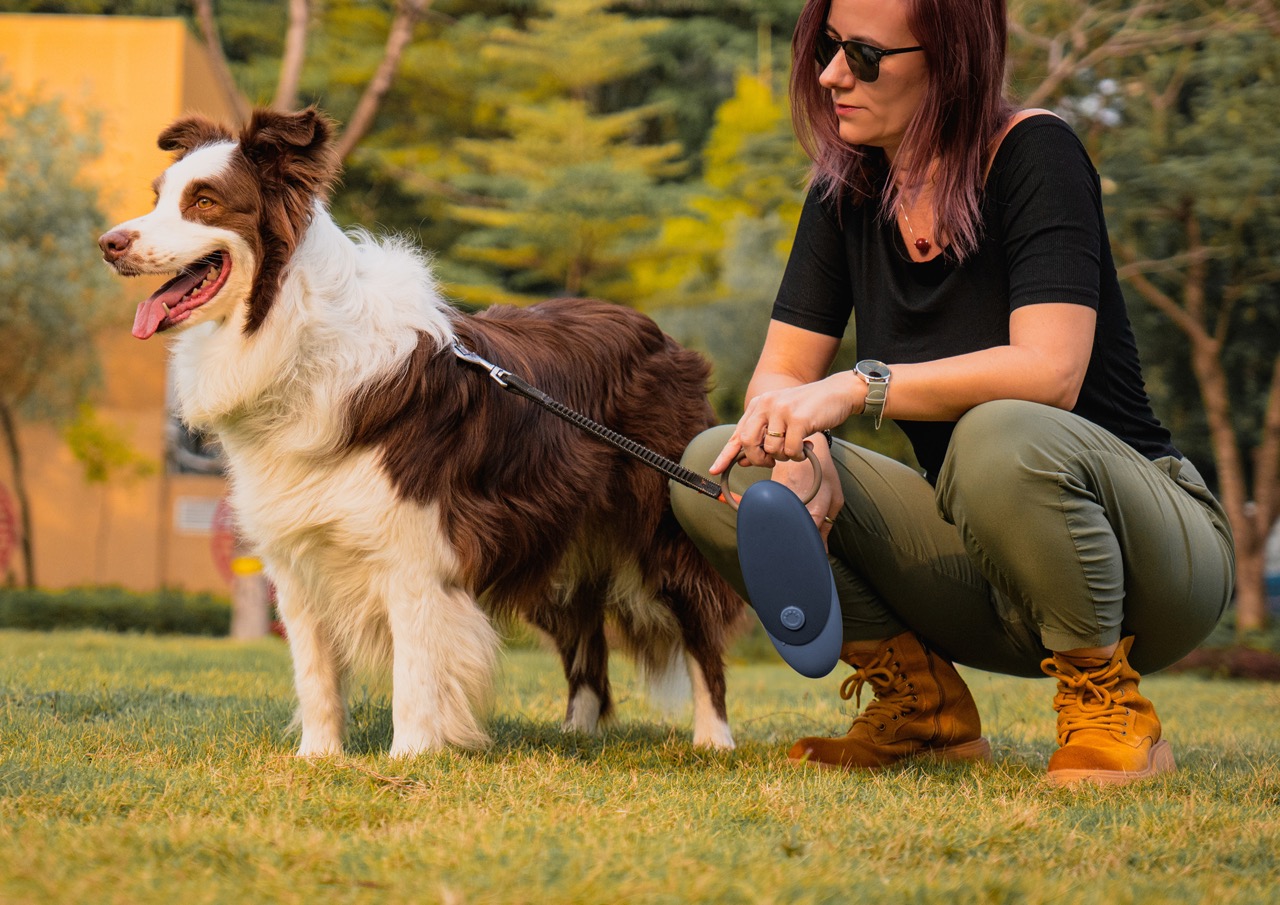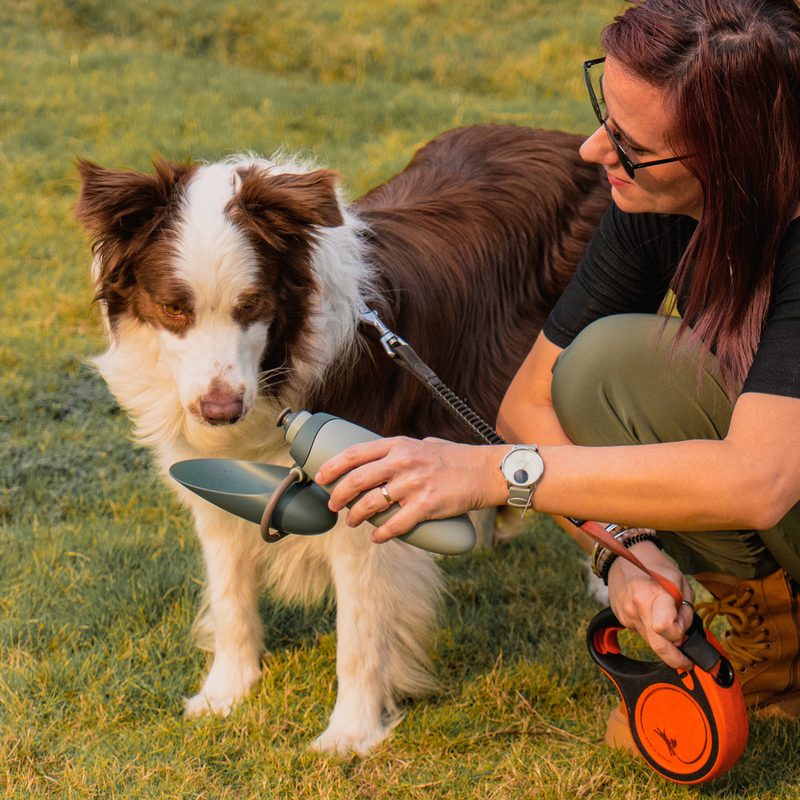
Most dog water bottles solve one problem: carrying water. Otto was designed to solve three at once — carrying it, dispensing it, and doing both without a single loose part to lose.
Starting from the failure mode
Every design decision on Otto started from the same question: what breaks first on a typical dog bottle? In our own testing and in the reviews of competing products, the answer was almost always the same — the separate bowl attachment. It gets left in a bag, dropped on a trail, or simply forgotten at home, and the bottle becomes useless the moment it’s needed most.
So the first engineering constraint we set was non-negotiable: no separate bowl.
The rotating cap
Otto’s cap rotates on a custom hinge structure — one of the three utility patents protecting the product — so the same piece that seals the bottle also becomes the drinking surface. There’s no second component to track, no lid to set down on dirty ground while your dog drinks.
Getting the rotation mechanism right took several iterations. It needed to:
- Seal completely when closed, with zero drip
- Rotate smoothly with one hand, even for a user wearing gloves
- Hold its shape under repeated use without the hinge loosening over time
Magnetic, not friction-fit
The lid closes with embedded magnets rather than a threaded or friction-fit seal. Threaded caps are reliable but slow — and slow is a real cost when a dog is pulling at the leash mid-walk. Magnets let the cap snap shut with a single motion, audibly and tactilely confirming it’s sealed, which matters when you’re not looking directly at it.
Built to be squeezed
The body uses a soft-silicone construction that controls flow when squeezed, rather than relying on gravity alone. This does two things: it lets the handler control how much water reaches the bowl (less waste), and it lets the bottle compress for more efficient storage when it’s empty.
Why patents matter here
Otto is protected by one aesthetic patent and three utility patents — covering the rotating cover and integrated bowl, the flip cap’s hinge structure, and the handle’s brake mechanism. That’s not a marketing detail; it reflects how much of what feels simple about using Otto is actually the result of solving a specific mechanical problem, deliberately, rather than defaulting to what’s already on the shelf.
Good design, in a product like this, is mostly invisible. You notice it only in the absence of friction — no fumbling, no dropped bowl, no wasted water.