Introducing a dog to a new baby begins well before anyone comes home from the hospital. The most helpful changes are often ordinary ones: where your dog rests, how they ask for attention, and what happens when you are occupied. Give those changes time to become familiar before the household becomes busier.
The aim is not a perfect first photograph. It is a home where the dog has clear choices, the baby has protected space, and adults can manage both without rushing. Work in small steps. If a step feels difficult, make it easier rather than pushing through.
What should you change before the birth?
Look at a typical day and identify what may need to work differently. If walks, meals or rest will shift, begin adjusting them gradually now. Keep a few reliable anchors, such as the morning toilet break and the evening meal. You do not need a schedule that runs by the minute; you need a rhythm your dog can recognise.
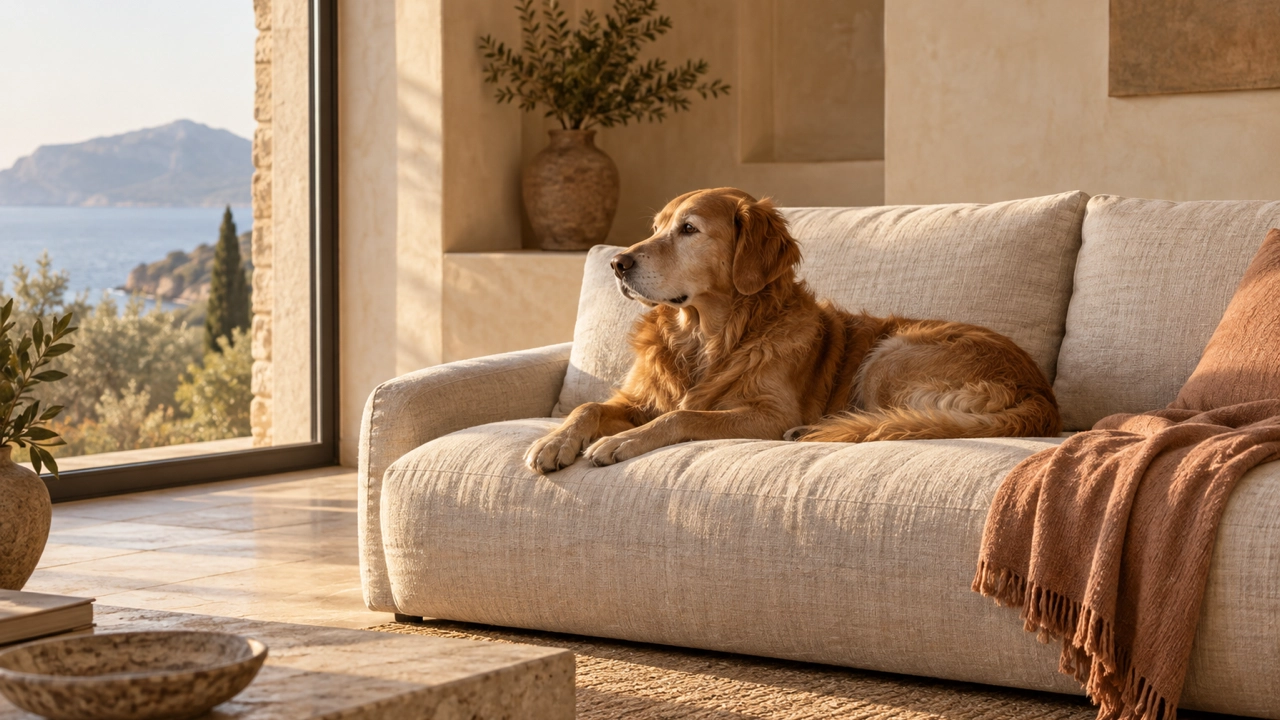
Decide on boundaries before the baby arrives. Will the nursery be off-limits? Is the sofa still available? Where can your dog rest while you feed or change the baby? Use a door or gate to make those boundaries clear. Avoid suddenly excluding your dog from a room they have always used on the day you bring the baby home.
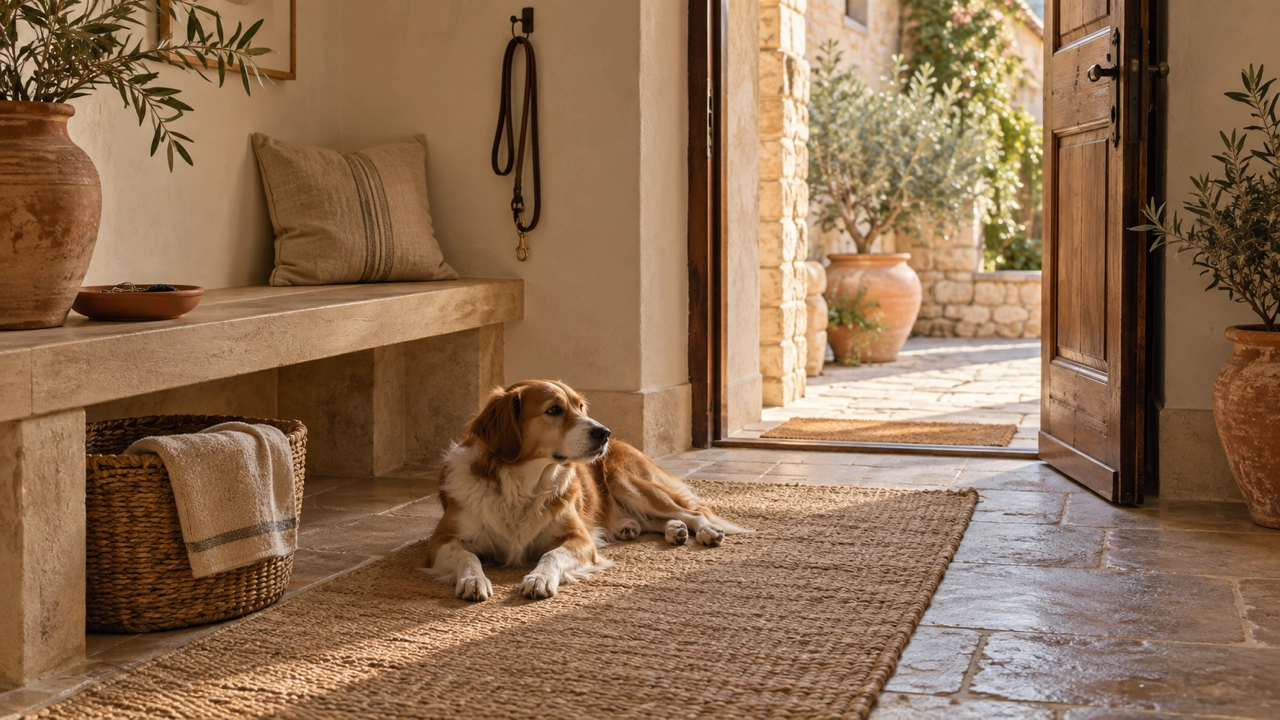
Set up a comfortable place away from the baby’s sleeping and changing areas. A bed or mat in a quiet corner gives your dog somewhere to go without being sent away from family life. Let them choose to rest there. Reward calm visits with a treat or gentle praise, then leave them undisturbed.
Practise a few useful cues in ordinary moments: settle or go to your mat for quiet time, stay for a short pause, and a reliable response when called away. Keep sessions brief and easy. A cue is most useful when your dog can follow it without tension, not when you have to repeat it over a crying baby.
Plan how your dog will get walks, meals and attention in the first days, including when you are tired or away. Arrange help from someone your dog already knows if possible. If the new routine makes walks harder to fit in, this guide to whether one walk a day is enough offers a useful way to think about routine and the needs of the individual dog. If your dog is used to constant contact, begin practising short, comfortable periods of independence. Our guide to how much attention a dog really needs has more on building a day with both connection and rest.
How can your dog become familiar with baby sounds and scents?
A baby brings unfamiliar sounds. Play a recording of gentle baby noises at a low volume while your dog is relaxed and doing something pleasant, such as eating or resting. Keep the session short. Over several days, increase the volume only if your dog remains at ease. Do not play cries loudly to see what happens. The point is familiarity, not endurance.
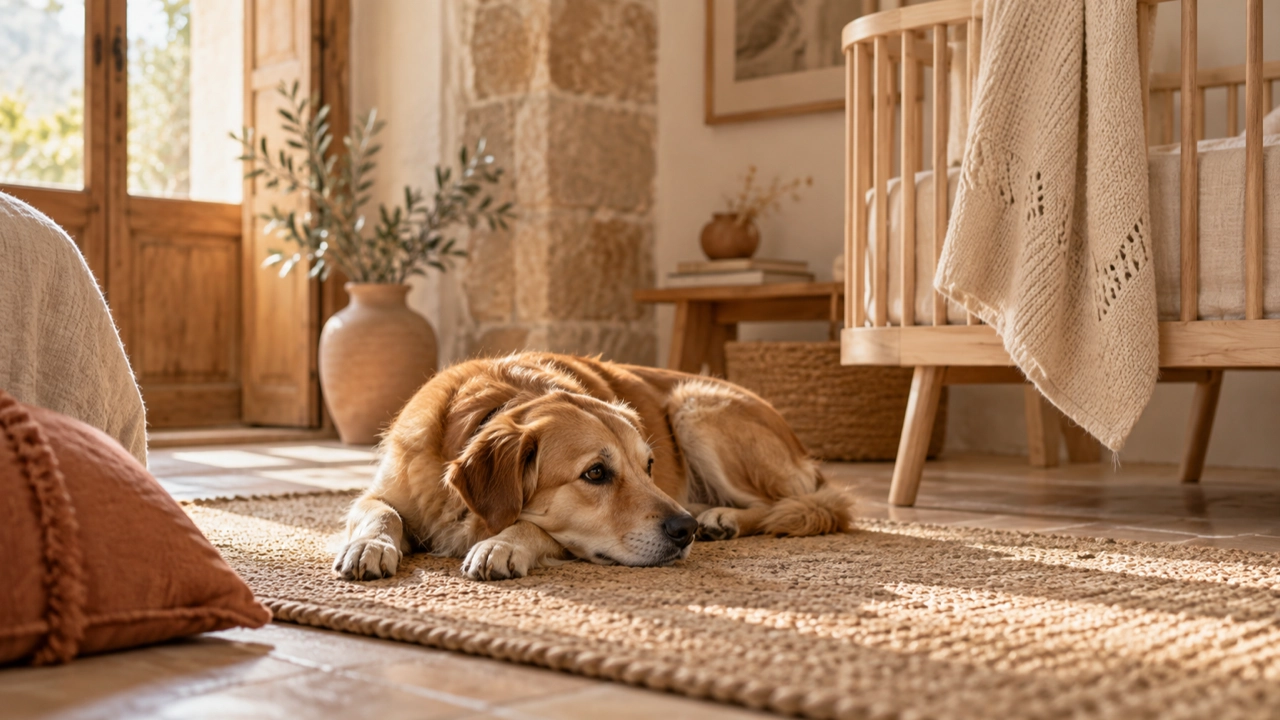
Let baby items enter the home gradually. Place a pram, bassinet or folded blanket in its intended spot and allow your dog to notice it without encouraging them to climb in or investigate every surface. Teach the same boundaries you intend to keep later. A pram can become an ordinary part of the room before a baby is ever inside it.
If you bring home a blanket or item of clothing that has been near the baby after the birth, let your dog smell it calmly while an adult holds it. Do not press it towards their face or leave it where they can take it. Scent is one piece of the introduction, not a substitute for a careful meeting.
Watch the dog in front of you. If they move away, become very alert or cannot settle, give them more space and return to an easier version of the exercise. There is no prize for completing every preparation task in one afternoon.
Can you practise the new household routine without a baby?
Yes. Carry a bundled blanket or a doll around the house to rehearse the movements that will soon be common: sitting down to feed, standing up with something in your arms, opening a gate and walking through a doorway. This is practice for the adults as much as for the dog.
Ask your dog to settle on their mat while you sit in the chair you expect to use for feeding. Reward a few calm moments, then release them. Build duration slowly. If they prefer to rest farther away, that is fine. The goal is not to have them close to every baby-care activity.
Practise walking beside an empty pram in a quiet place if pram walks are part of your plan. Start without trying to manage traffic, a baby and a pulling lead at once. Make sure your dog can walk comfortably with you and keep the lead separate from the pram handle. If someone else will handle the dog on early outings, let them practise together beforehand.
Rehearse the small safety habits too. Close gates behind you. Put the dog’s food and toys where a crawling child will not later reach them. Make sure your dog’s retreat remains accessible to the dog and unavailable to the baby. These arrangements will matter more than any elaborate greeting.
What should happen when you bring the baby home?
Keep the arrival quiet. If possible, have someone take your dog for a familiar walk or toilet break before the baby comes through the door. Give the dog a chance to greet the returning adult first, without that adult holding the baby. There is no need to hold a meeting the moment everyone arrives.
When the room is settled, one adult can hold the baby securely while another manages the dog. Use a lead or gate if it helps everyone keep comfortable distance. Let your dog observe. If they appear relaxed and choose to approach, allow a brief, controlled sniff at a safe distance, then calmly call them away and reward them. Do not bring the baby to the dog’s face, force contact or ask the dog to tolerate being crowded.
A quiet look from across the room is a successful first introduction. So is choosing to lie down elsewhere. Keep the encounter short and end it while both adults can still pay full attention. Repeat calm, brief opportunities later instead of asking one greeting to establish the whole relationship.
If your dog freezes, stiffens, growls, avoids the room or becomes overexcited, create distance without scolding. A growl is information that the dog needs space. Use a gate or separate room and seek help from a qualified, reward-based behaviour professional if you are concerned. Safety matters more than trying to make the moment look friendly.
How do you help your dog settle in the following weeks?
Keep the dog’s familiar needs visible amid the new routine: meals, walks, rest and a little focused time with you. A short sniffing outing with one adult can be more manageable than insisting every walk include the whole family. Let your dog keep a place where nobody follows them to pat, play or take away a chew.
Make calm things happen when the baby is nearby. Offer your dog their usual treat or a suitable activity behind a gate while you feed the baby. Praise them for resting quietly at a comfortable distance. Do not use food to lure a worried dog closer. Being able to leave should always remain an option.
Never leave a dog and baby unsupervised. This includes a sleeping baby, a dog you trust, and the few seconds it takes to answer the door. If you cannot actively watch them, separate them with a closed door or a secure gate. As the baby begins to reach, crawl and move, keep that separation plan in place and adjust it to protect the dog’s resting and feeding spaces too.
Progress may be uneventful. Your dog may watch, sniff the air and return to their mat. That is enough. You are building a reliable everyday pattern, not asking for instant affection. With time, clear boundaries and steady care give both members of the household room to feel at home.
Join the Ottimo Plus waitlist for considered dog essentials designed around everyday life together.