A hot sidewalk doesn’t announce itself the way a hot stove does. Your dog can’t tell you the pavement is burning its paws, and it won’t tell you it’s three ounces short of the water it needed an hour ago. By the time the signs are obvious — stumbling, collapsing, refusing to move — the window for an easy fix has usually already closed.
Heat and hydration are the same problem wearing two names. A dog that’s overheating is also a dog that’s losing fluid fast, through panting, through drooling, through effort it can’t recover from without water. Reading the early signals is less about memorizing a checklist and more about knowing what “off” looks like on your specific dog, before it becomes an emergency.
Why heat catches dogs off guard
Dogs regulate temperature almost entirely through panting, with a small assist from sweat glands in their paw pads. That system works fine on a mild day. On a hot one, especially with any humidity, it runs out of headroom quickly — and unlike a person, a dog can’t decide to slow down, find shade, or reach for a bottle on its own. It relies on you to notice first.
Flat-faced breeds (Frenchies, pugs, boxers), heavier dogs, older dogs, and anything with a thick double coat are all working with less margin than a lean, short-haired adult dog on the same walk.
The signals, in order of urgency
Early — still easily reversible:
- Panting that’s heavier than the pace justifies
- Seeking shade or stopping on their own without being asked
- Slower pace, more interest in stopping than continuing
Getting serious — stop the walk now:
- Thick or ropey saliva, rather than thin and watery
- Gums that feel dry or tacky instead of moist and slick
- Reluctance to keep walking even with encouragement
- Bright red or purple-tinged gums and tongue
Emergency — this is a vet visit, not a rest stop:
- Stumbling, disorientation, or loss of coordination
- Vomiting or diarrhea during or right after exercise
- Collapse, or extreme lethargy that doesn’t improve in shade with water
If you see anything in that last group, stop, cool the dog with water (not ice), and get to a vet — don’t wait to see if it passes. Cool water poured over the neck, chest, and paw pads brings body temperature down faster than most people expect; ice or ice-cold water can actually constrict blood vessels near the skin and slow the cooling process, so lukewarm-to-cool is the right target, not freezing.
Two groups that need extra margin
Puppies and senior dogs both run hotter risk profiles than a healthy adult in its prime. Puppies haven’t fully developed their temperature regulation yet and tend to keep playing past the point where an adult dog would already be seeking shade — they need someone else making the stop-and-drink decision for them. Senior dogs often have less cardiovascular reserve, may be carrying extra weight, and are more likely to have joint pain that makes “just walk a little further to find shade” a worse trade than it sounds. For both groups, treat the “early” signals above as the cue to act, not the “getting serious” ones.
Common mistakes that undo good intentions
Most hot-weather hydration problems aren’t caused by not caring — they’re caused by small habits that quietly work against good intentions:
- Waiting for visible thirst. A dog that looks fine at minute ten can be behind by minute twenty-five; panting ramps up faster than it winds back down.
- Judging heat by air temperature alone. Humidity and direct sun exposure change the real risk far more than the number on a weather app suggests.
- Assuming shade fixes everything. Shade helps, but a dog that’s already breathing heavily needs water and rest, not just a few degrees of relief.
- Skipping the pavement check. Air temperature and ground temperature are not the same thing — asphalt on a sunny day can run 40–60°F hotter than the air above it.
What “enough water” actually looks like
Most dogs need somewhere around 1 ounce of water per pound of body weight per day under normal conditions, and hot-weather exertion can push that up by 50% or more. A 40-pound dog on a warm midday walk might reasonably need 25–30 oz just for that outing, on top of what it drinks at home.
The practical version: offer water before your dog seems desperate for it, not after. By the time a dog is visibly seeking out water, it’s already running a deficit.
Making water access the easy choice
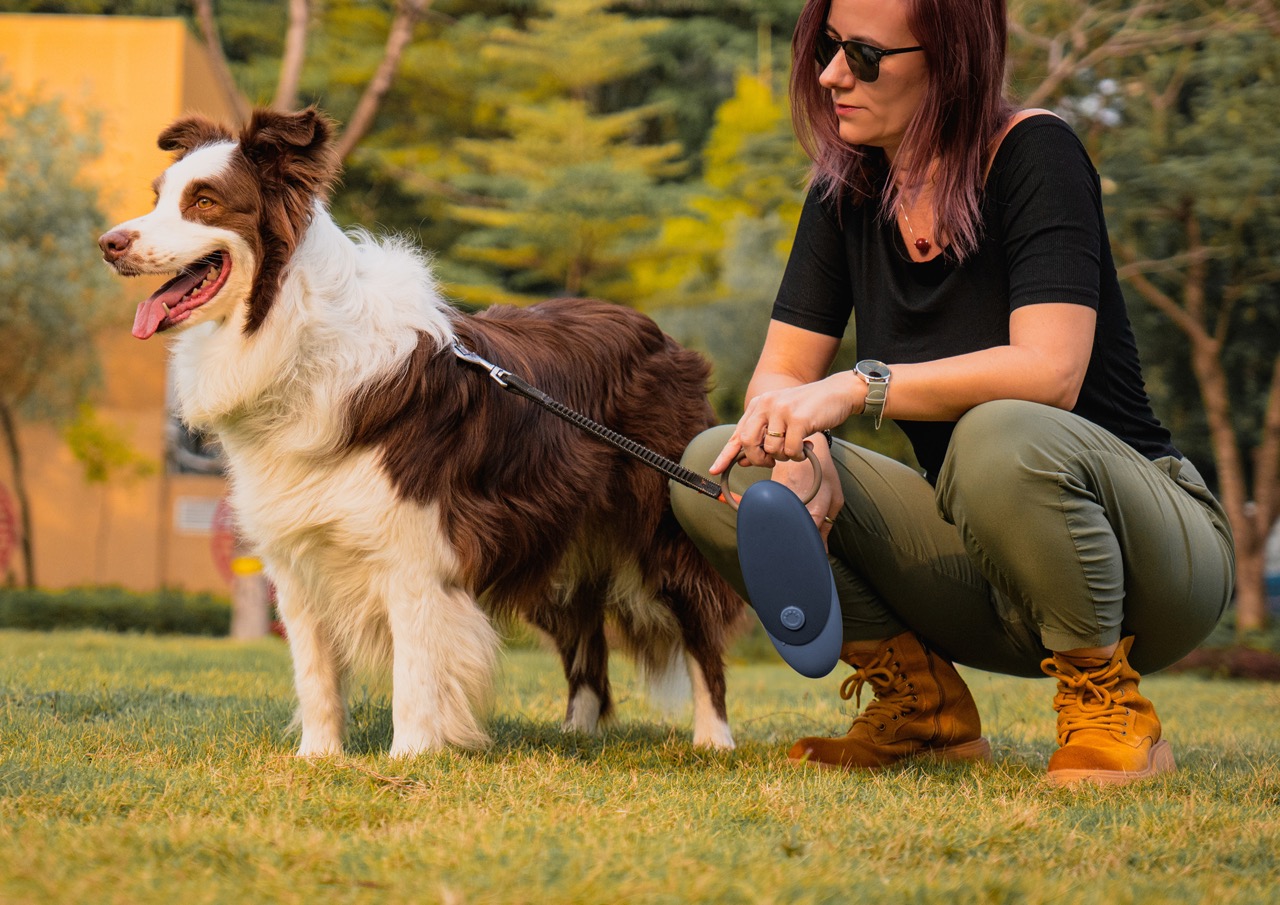
The single biggest predictor of whether a dog stays hydrated on a hot walk isn’t how much water you’re carrying — it’s how much friction there is to actually offering it. A bottle that needs to be unscrewed, poured into a separate bowl, and packed away wet gets used less often than one that doesn’t. Otto’s rotating cap flips into a bowl in one motion, which sounds small until you’re the one deciding whether it’s worth stopping for the third time in twenty minutes. Gear that removes friction gets used; gear that adds a step gets skipped exactly when it matters most.
A simple hot-weather routine
- Check the pavement with the back of your hand — if it’s too hot for five seconds, it’s too hot for paws
- Walk early morning or evening when temperatures allow it
- Offer water every 15–20 minutes in real heat, not just when your dog seems thirsty
- Watch the dog, not the clock — the signals above matter more than the timer
- Bring more water than you think you’ll need; turnarounds and detours happen
Heat-related emergencies in dogs are almost always preventable, and almost always come down to the same root cause: a person who didn’t catch the early signs because they were watching the trail instead of the dog. For a deeper look at exactly how hot is too hot, and pavement-specific guidance, walkingdog.io’s guide to hot-weather walking is a solid companion read. And if you’re still working out baseline hydration needs before heat even enters the picture, see our guide to how much water your dog needs on a hike.