The useful answer is not a perfect number. It is a plan that gives your dog a chance to drink, toilet, move, and settle again before discomfort turns into the reason you stop.
For a healthy adult dog that already travels comfortably, planning a break every few hours is a sensible starting point. It is not a target to defend. Puppies, older dogs, nervous travellers, warm weather, unfamiliar roads, and changes to the dog’s normal routine can all make an earlier stop the better choice.
The best road-trip schedule is built around the dog in the car, not the range left in the fuel tank.
Start with your dog’s ordinary day
Before opening a route planner, think about a normal day at home. When does your dog usually go outside? How long can they rest comfortably between walks? Do they drink little and often, or take a longer drink after activity? A familiar pattern is more useful than a universal timetable.
Use that routine to set the longest planned driving leg, then shorten it for the journey. A dog may sleep through most of a quiet morning at home but stay alert in a moving car. The sound, vibration, temperature, and unfamiliar surroundings all add effort, even when the dog appears calm.
If your dog is very young, elderly, pregnant, unwell, taking medication, or has urinary, digestive, mobility, or breathing concerns, ask your veterinarian what is appropriate before a long trip. The same applies to a dog with repeated car sickness or intense travel anxiety. More stops may help, but they are not a substitute for individual advice.
Plan the first stop before you leave
“We will stop when someone needs to” sounds flexible. In practice, it often means driving past the last easy option and searching under pressure.
Mark the first suitable stop before departure. For each longer leg, save a primary option and a backup. Look for somewhere away from fast traffic with a safe place to walk on lead, shade or shelter, and enough space to get in and out of the car without opening a door directly into danger. Motorway services may be convenient, but a quiet park a few minutes from the route can make a better reset for a noise-sensitive dog.
Check restrictions rather than assuming every green patch welcomes dogs. Download the route or save the addresses if reception may be poor. A small amount of planning creates room to change course without making the whole day feel improvised.
Make each break useful
A good dog stop does not need to be long or ambitious. It needs to answer a few simple needs calmly.
- Attach the lead securely before opening the vehicle.
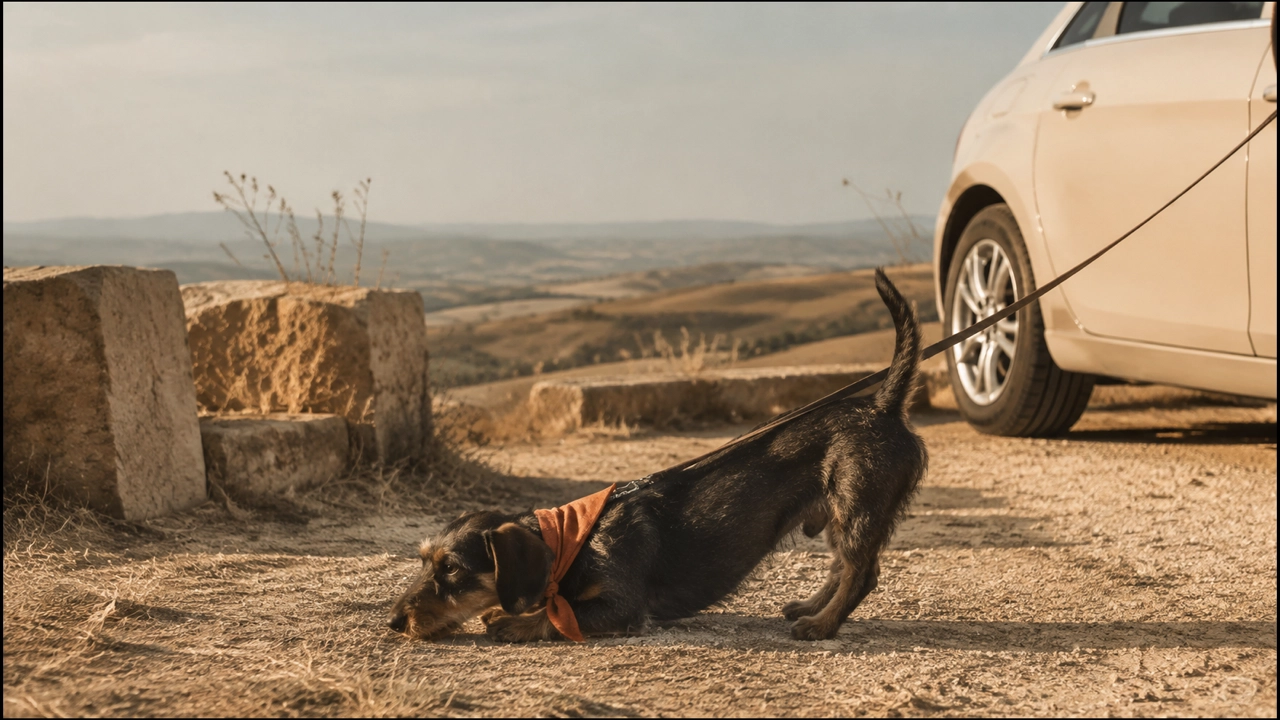
- Give your dog time to toilet and sniff without rushing them from the car to the next task.
- Offer fresh water in a clean vessel.
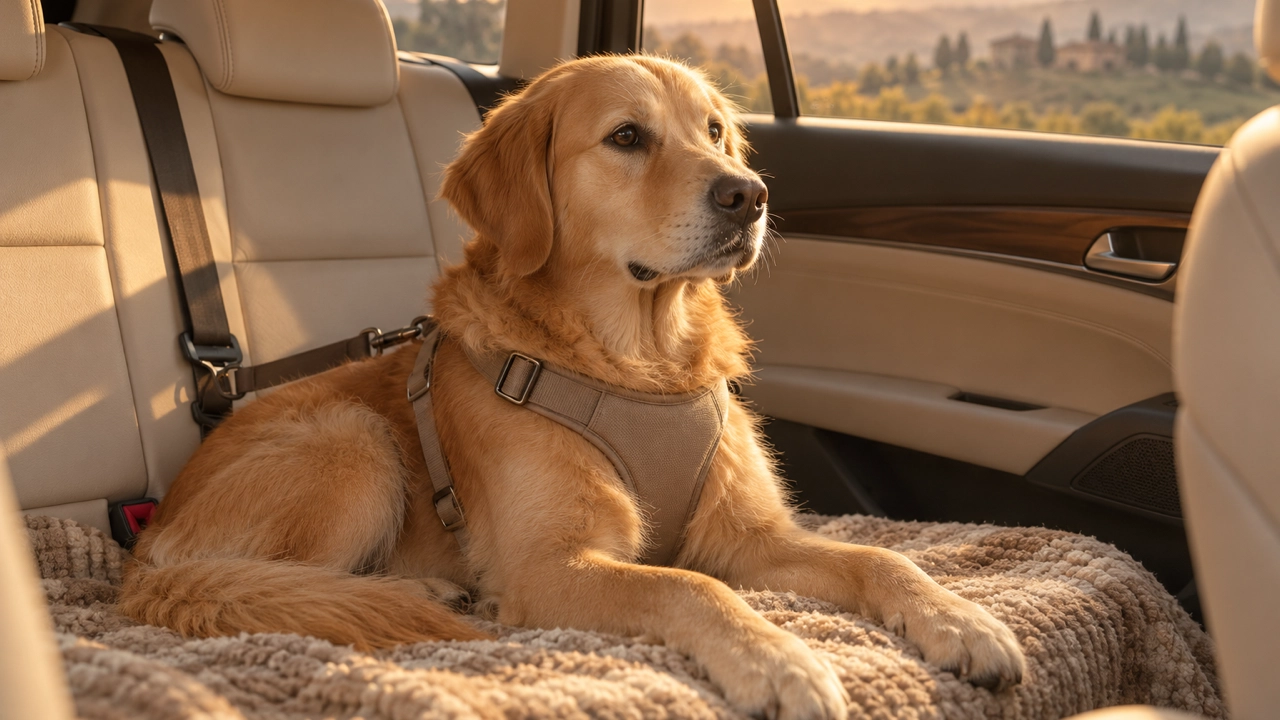
- Check that the restraint, bedding, and temperature inside the car are still comfortable.
- Notice your dog’s posture and behaviour before deciding to continue.
Keep the stop measured. A frantic game beside a busy road can leave a dog more aroused than before. A short, unhurried walk and a few minutes to take in the surroundings are often more useful. The aim is not to exhaust the dog at every break. It is to let their body move and their attention soften.
Try to preserve the broad rhythm they know at home. If a longer walk normally happens in the middle of the day, choose one stop where there is time and space for it rather than turning every pause into a two-minute toilet break. This guide to whether one walk a day is enough for a dog is a useful reminder that frequency alone never tells the whole story.
Stop earlier when the dog tells you to
The clock is only one source of information. Stop sooner if your dog cannot settle, repeatedly changes position, pants when the car is comfortably cool, drools, whines, or becomes unusually withdrawn. These signs do not all mean the same thing, but they are a reason to pause and assess rather than push towards the next scheduled pin.
Some dogs make their needs obvious. Others remain still until the door opens. Learn what “comfortable in the car” looks like for your dog on short, familiar journeys before asking them to manage a full day on the road.
If your dog vomits repeatedly, seems weak, has difficulty breathing, appears disoriented, or does not recover during a calm stop, end the journey plan and contact a veterinarian. A travel schedule should always be easier to change than the dog’s wellbeing.
Adjust for weather and traffic
A three-hour leg on a cool, clear morning is not the same as three hours in congestion on a warm afternoon. Check the forecast along the route, not only at the destination. Sun exposure can shift as the road changes direction, and the back of the vehicle may feel different from the driver’s seat.
In warmer conditions, travel during cooler parts of the day where possible and choose shaded stops. Never leave a dog unattended in a parked vehicle while you use the facilities, collect food, or pay for fuel. If you are travelling alone, plan stops that let the dog remain with you, or arrange the journey so another adult can stay with them.
Cold and wet weather need their own practical adjustments. Keep a towel accessible rather than buried under luggage, and check paws after salted, gritty, or icy surfaces. A sheltered five-minute break is more useful than a longer stop that leaves a small, short-coated, or older dog cold and reluctant to get back in the car.
Separate human stops from dog stops carefully
Fuel, coffee, charging, and toilets can make a route look well covered, but not every human stop works for a dog. A crowded forecourt may have nowhere safe to walk. A scenic viewpoint may have no shade. A dog park can add excitement when what your dog needs is quiet.
Treat the dog’s needs as part of the route rather than an extra to squeeze into your errands. Combining stops is efficient when the place works for everyone. When it does not, two calm stops are better than one compromised one.
Pack the essentials where you can reach them without unloading the car: lead, harness, water, drinking vessel, waste bags, towel, medication, and a spare restraint if appropriate. Our guide to dog travel gear that actually gets used offers a simple filter for deciding what deserves space.
Let the schedule stay flexible
On the day, note how your dog responds after each break. If they settle quickly, drink normally, and appear comfortable, the planned rhythm may be working. If every leg ends with restlessness, shorten the next one. If a stop is noisy or exposed, move on to the backup rather than forcing it because it was on the itinerary.
Build extra time into the arrival estimate from the start. Then an additional walk, a missed turning, or ten quiet minutes in the shade does not feel like a delay. It is simply part of travelling with a dog.
The right number of stops is the number that keeps the day calm, safe, and adjustable. Plan every few hours. Watch the dog in front of you. Stop earlier when the journey asks for it.
Join the Ottimo Plus waitlist for considered dog essentials designed around everyday life together.